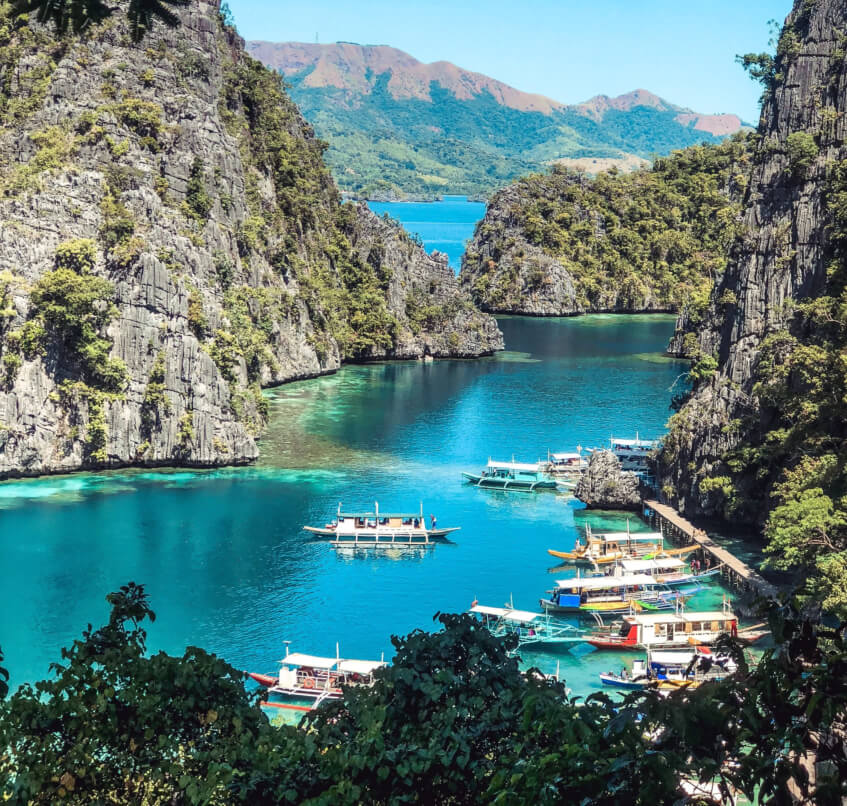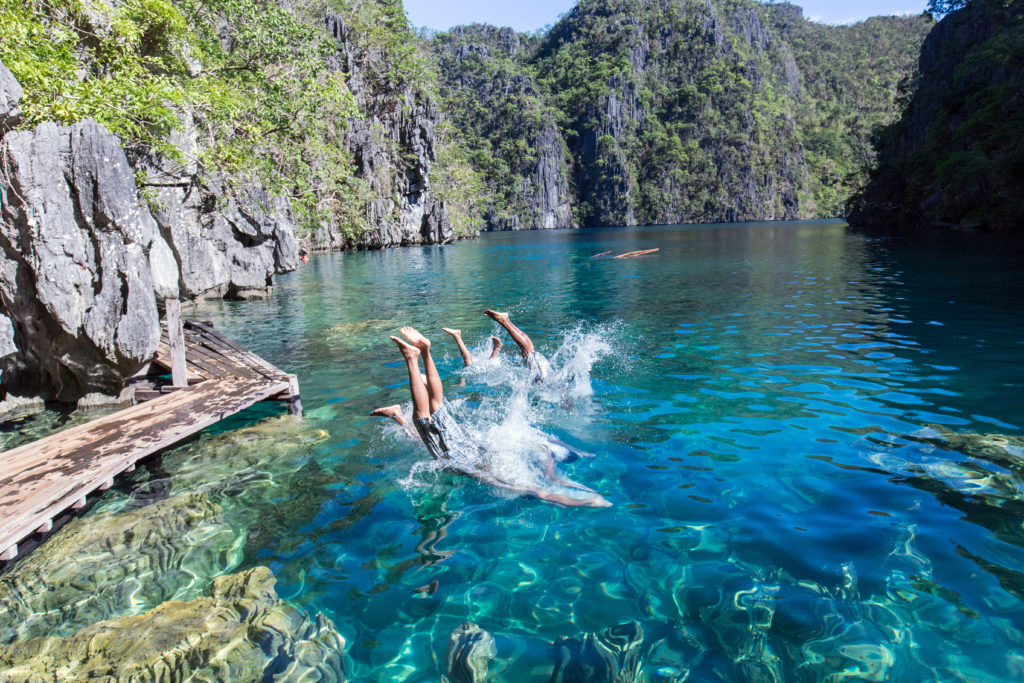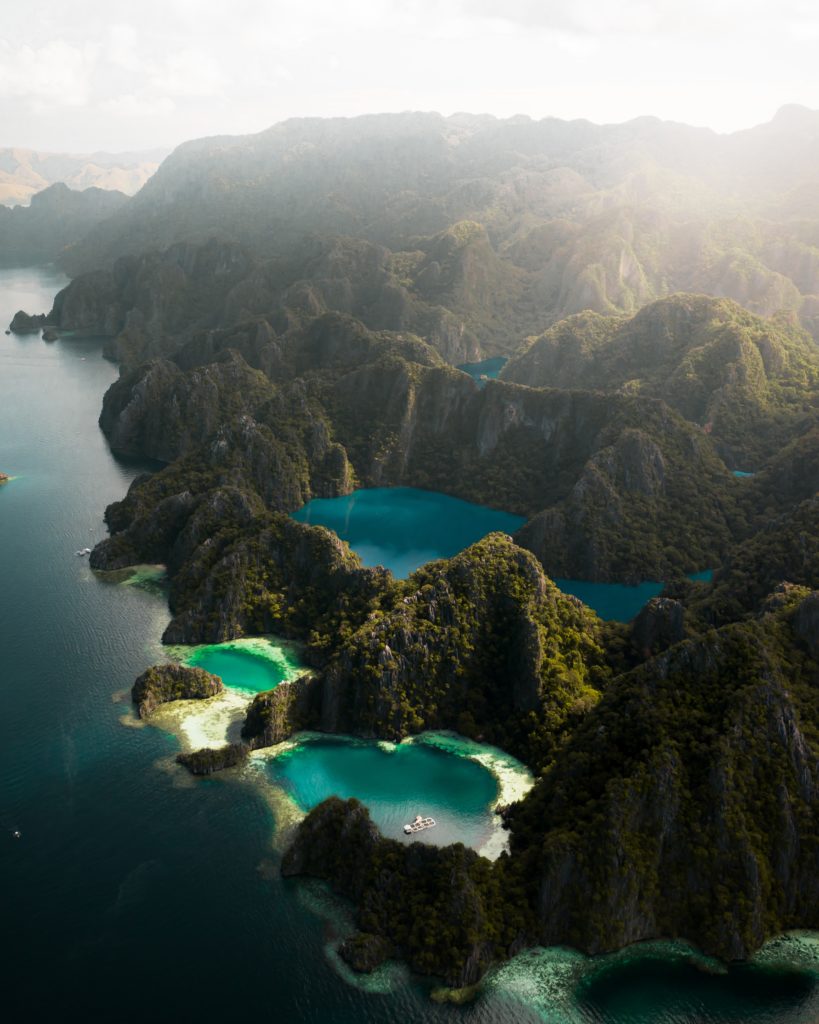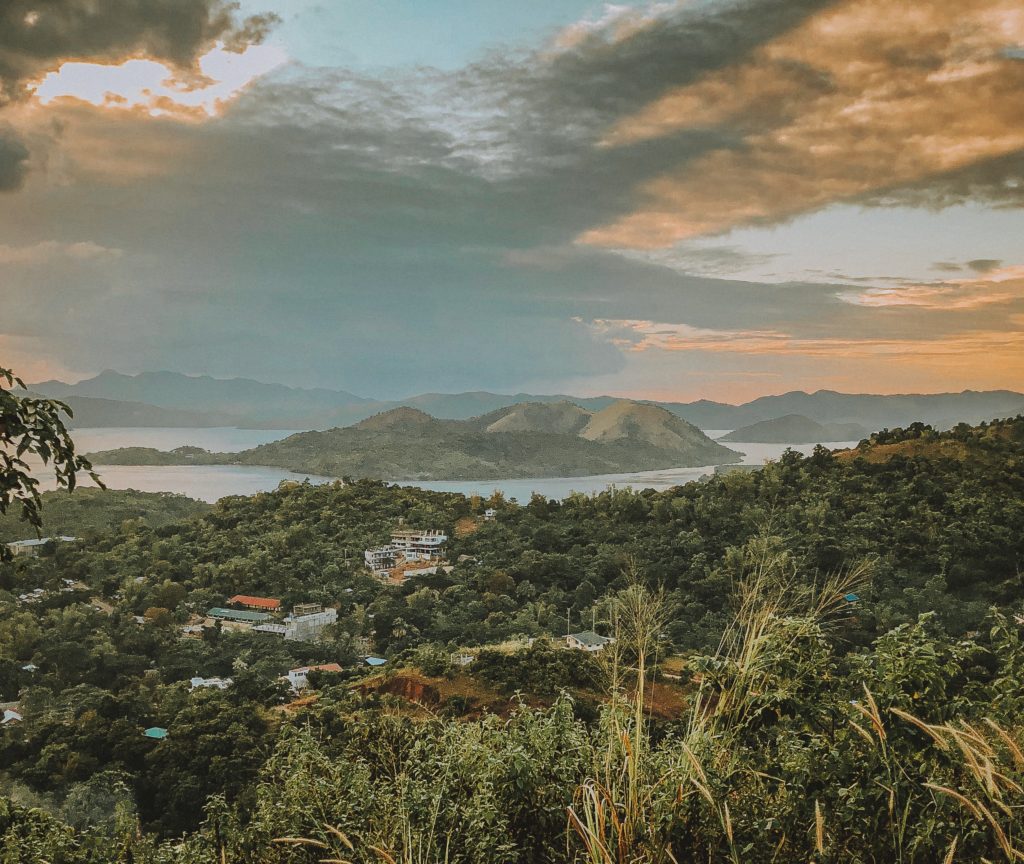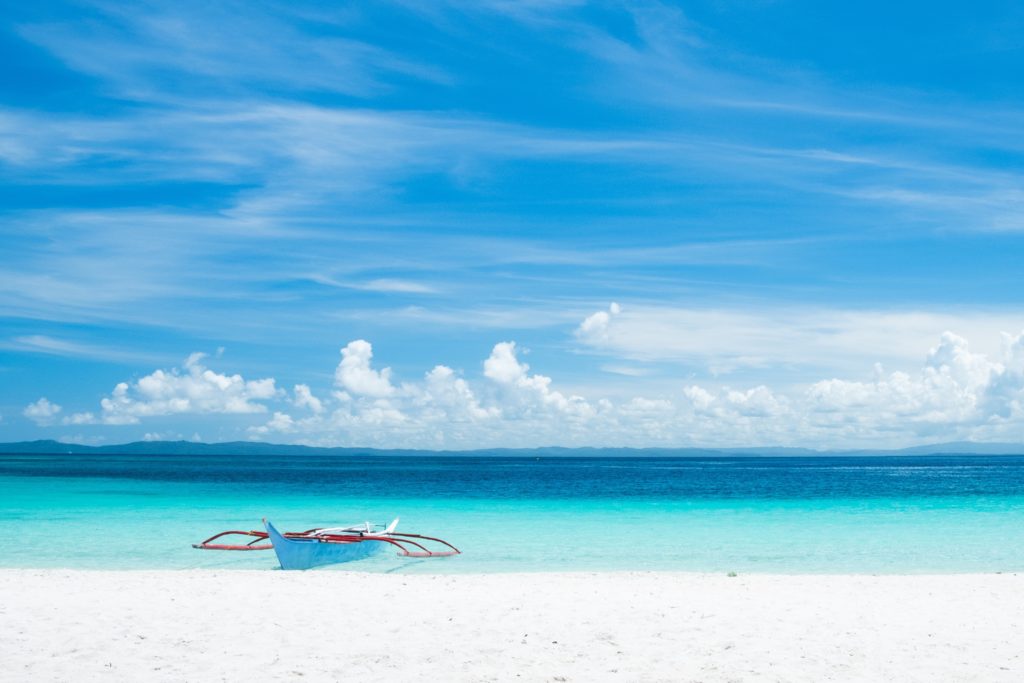
When in the Philippines: Escape to the most beautiful secluded beaches

  • Escape to these 7 Beautiful Secluded Beaches in the Philippines
  • These 7 Destination Beaches Await Your Return to the Philippines

The Philippines is blessed with many pristine beaches, including Boracay Island and Palawan Island. The beauty of these islands has already captured the world. Palawan Island was named as one of the 30 Best Beaches in the World by Conde Nast Traveler in 2020. Meanwhile, Boracay has been recognized by international travel magazine, Travel + Leisure, as the Best Island in the World in 2012; and several times by Conde Nast Traveler, including Best Island in the World in 2014, Top 10 destinations to watch in 2016, and World’s Best Island Beaches in the 2020 Readers’ Choice Awards.

Philippines Department of Tourism Secretary Bernadette Romulo-Puyat says the country has been hard at work, developing tour packages and circuits together with the various local government units. “Once international travel resumes, we are ready to welcome visitors again to our famous beach destinations like Boracay, and showcase our undiscovered gems and other improved tourists attractions that are just as beautiful and relaxing.”

Included in the list of  undiscovered gems are new destinations, such as these secluded beaches that offer the ultimate escape from the feeling of confinement, with wide open spaces and friendly smiles from the locals.

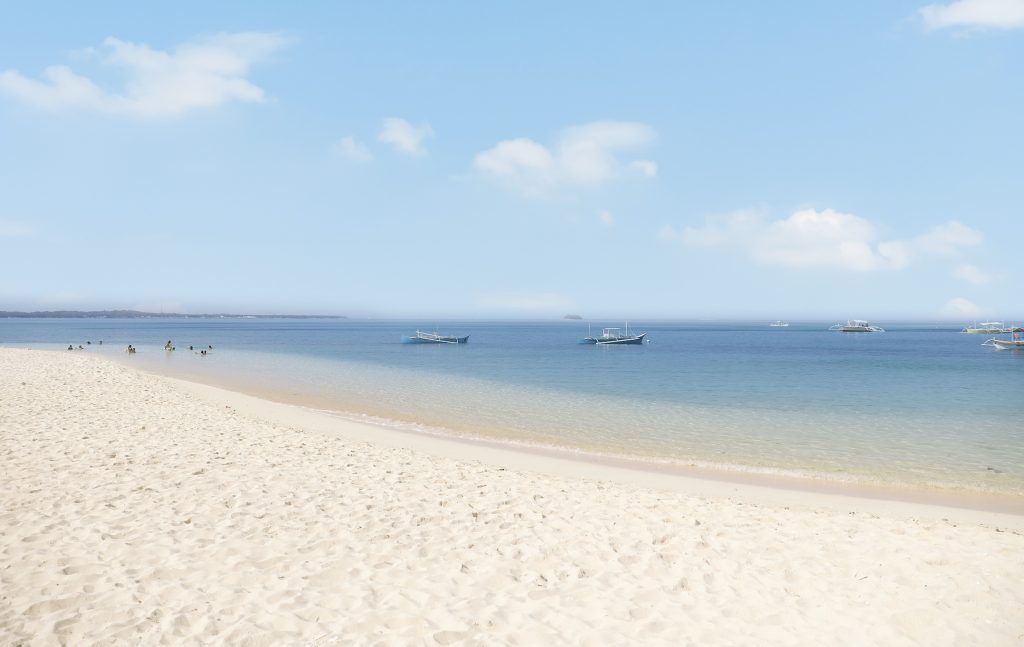
With more than 7,000 islands in a beautiful archipelago, definitely more fun awaits visitors for their next beach escape to these pristine and quiet little pieces of paradise.

Bantayan Island, Cebu
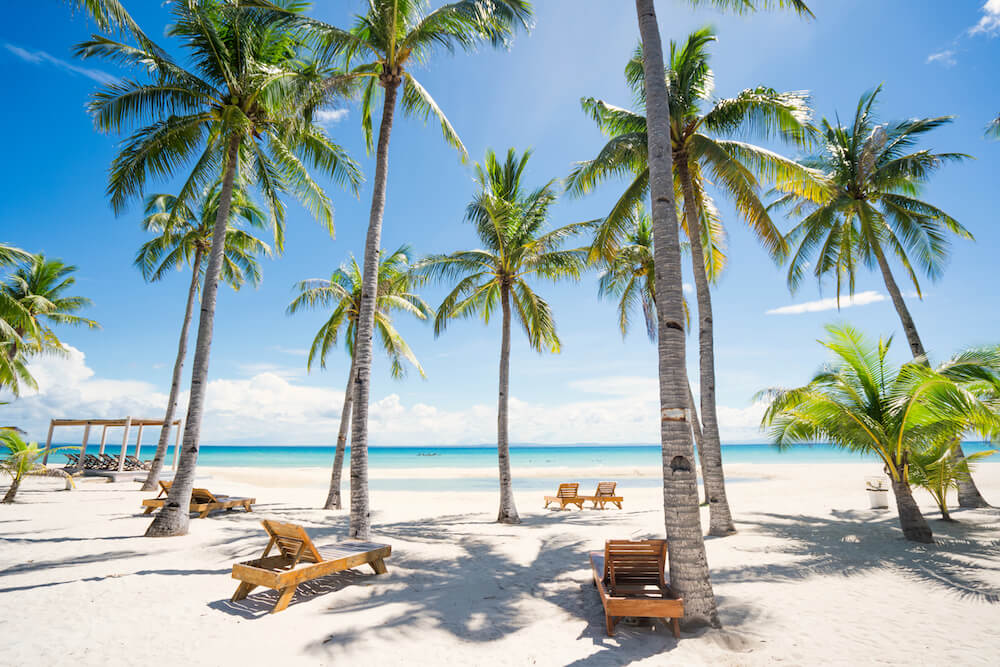
Located at the northern most tip of Cebu, Bantayan Island boasts of stunning white sand beaches and eco-tourism sites. From the Mactan Cebu International Airport, the island is easily accessible by boarding a bus at the Cebu North Bus Terminal. The journey will take you on a scenic ride to the northern tip of Cebu including a short ferry to the island. Activities in Bantayan include swimming, cliff diving, island-hopping, kayaking, and even skydiving. One can soak in the local culture by approaching locals who engage in fishing and production of savory dried fish as their main source of livelihood.
Bantayan Island, Cebu

Kalanggaman Island, Leyte

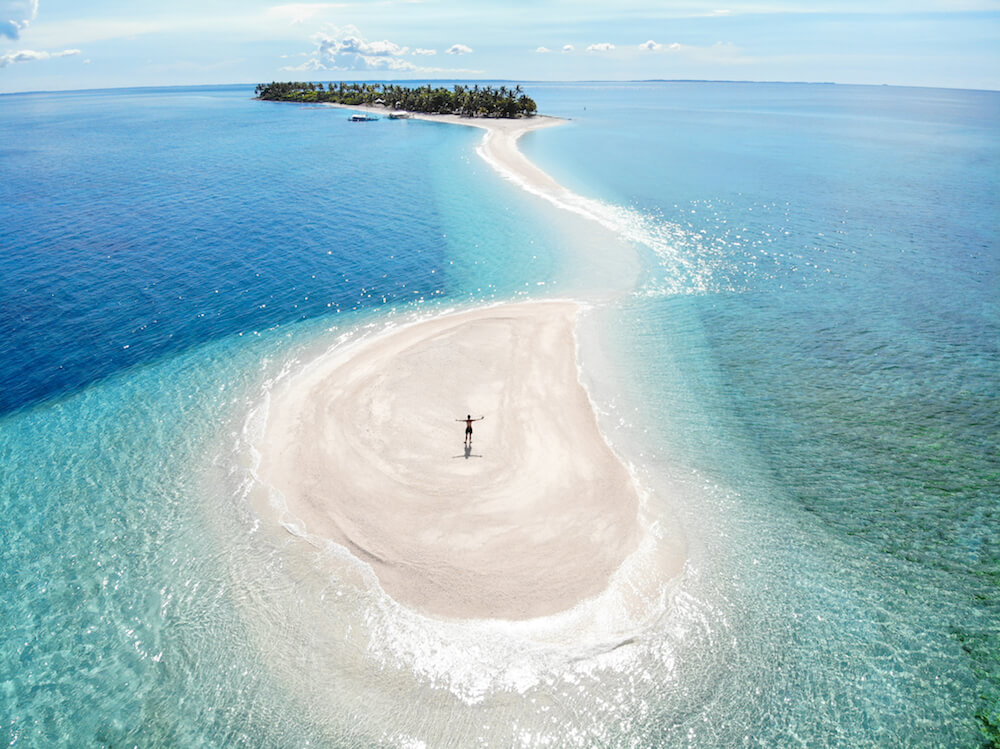
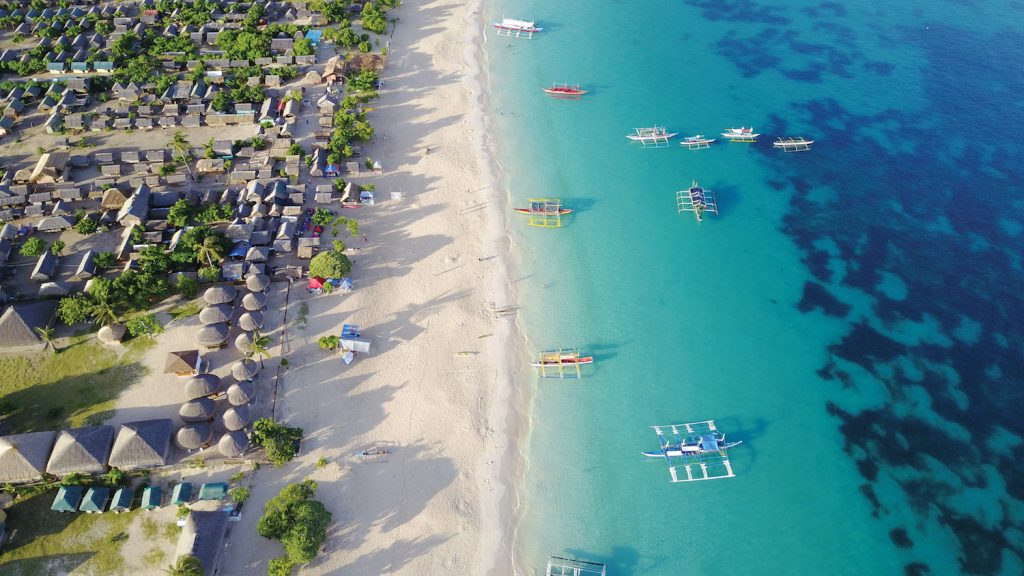
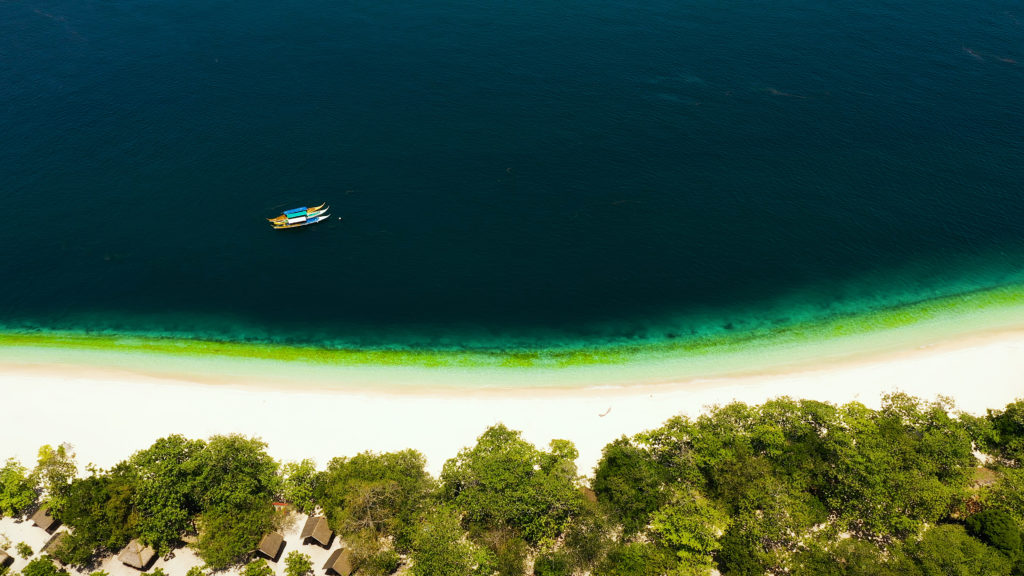
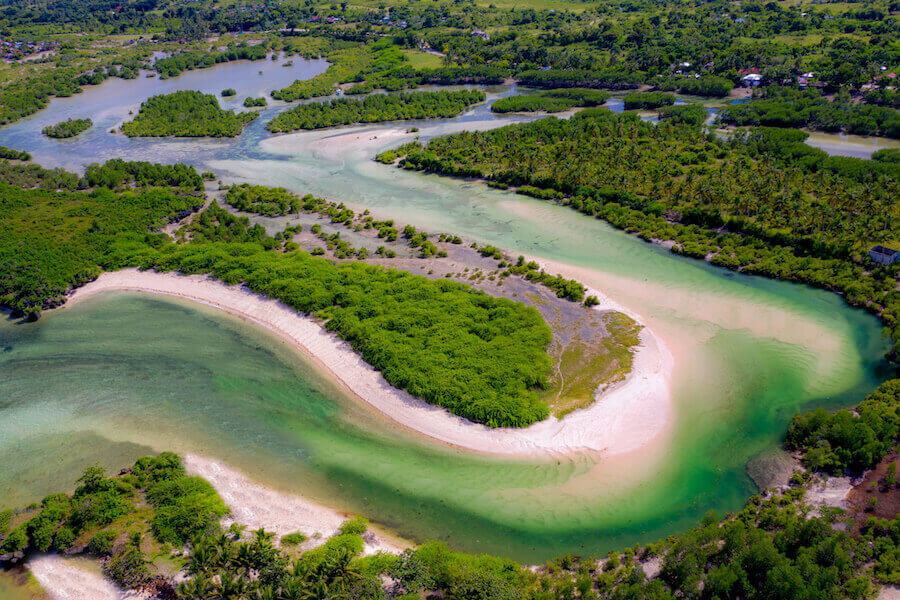
Kalanggaman Island from Above – The Philippines

The waters surrounding this long stretch of beach are crystal clear, with a white powdery sandbar that is perfect for a long solitary stroll and for taking lots of photos.

Kalanggaman is derived from the word “langgam,” which means bird in the local dialect, as the two ends of the island seem to flap like bird’s wings when viewed from above. There are no big resorts on Kalanggaman Island and crowds are kept at bay with the Municipality of Palompon putting a cap on the number of tourists that can visit per day. Those who want to spend the night can stay at native cottages or set up camp along the strip of beach and watch the stars put on a show against a gorgeous velvet sky.
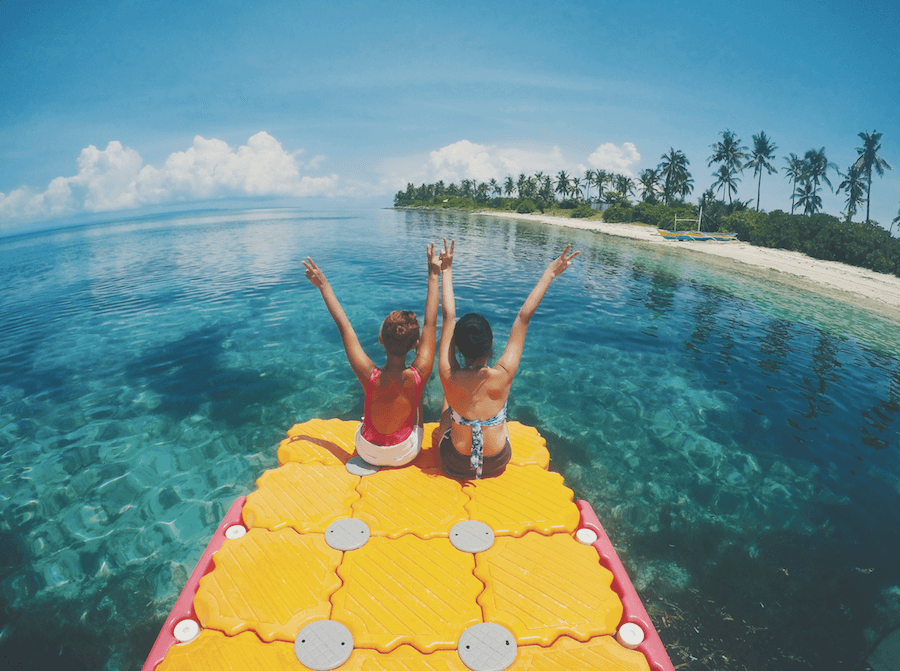
Kalanggaman Island, Leyte (c/o Laizananica Ormoc)

Secret Beach, El Nido, Palawan

Framed by towering cliffs and turquoise-hued waters, Secret Beach in El Nido is a hidden paradise waiting to be discovered by travelers who want to experience the thrill of finding a treasure from Mother Nature. The beach is accessible only by swimming through a crevice among the limestone rocks that’sjust above the water.
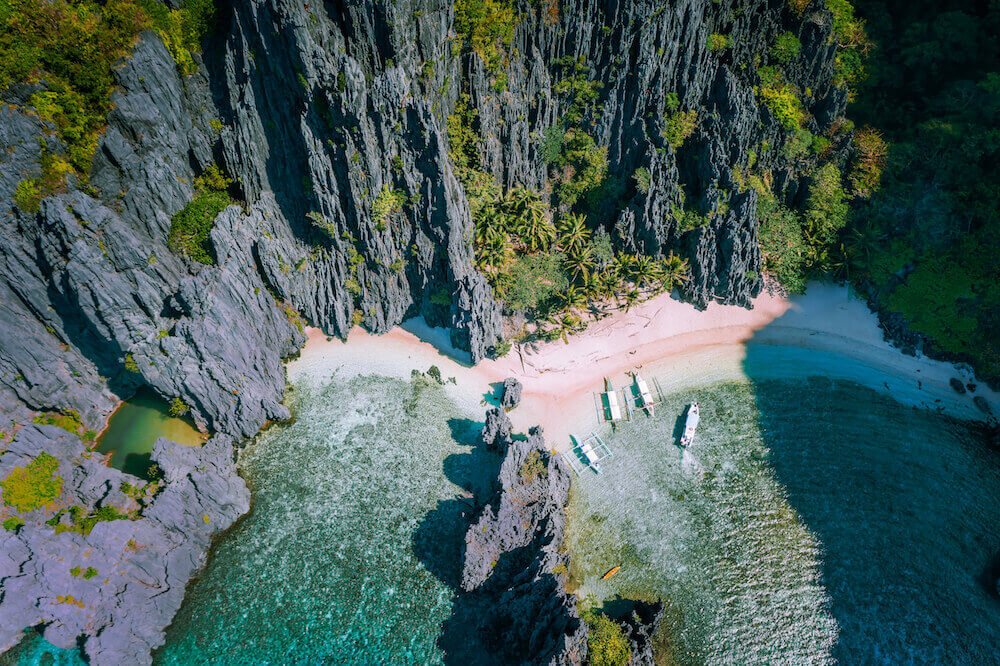
El Nido, Palawan, Philippines. Aerial view of Secret hidden lagoon beach with tourist banca boats on island hopping tour surrounded by karst cliffs scenery

Sugar Beach, Sipalay, Negros Occidental
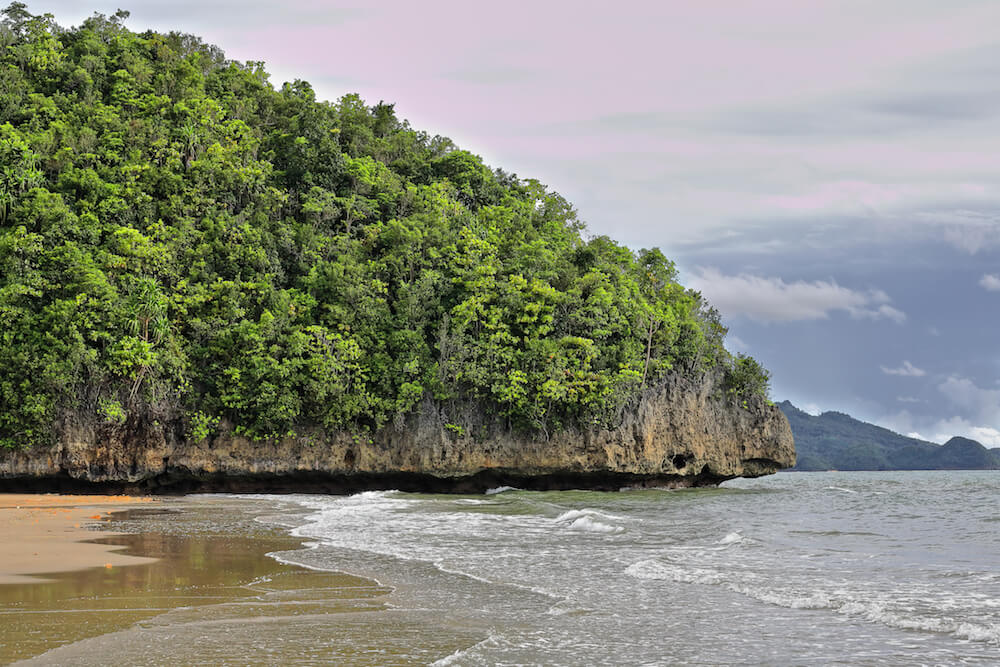
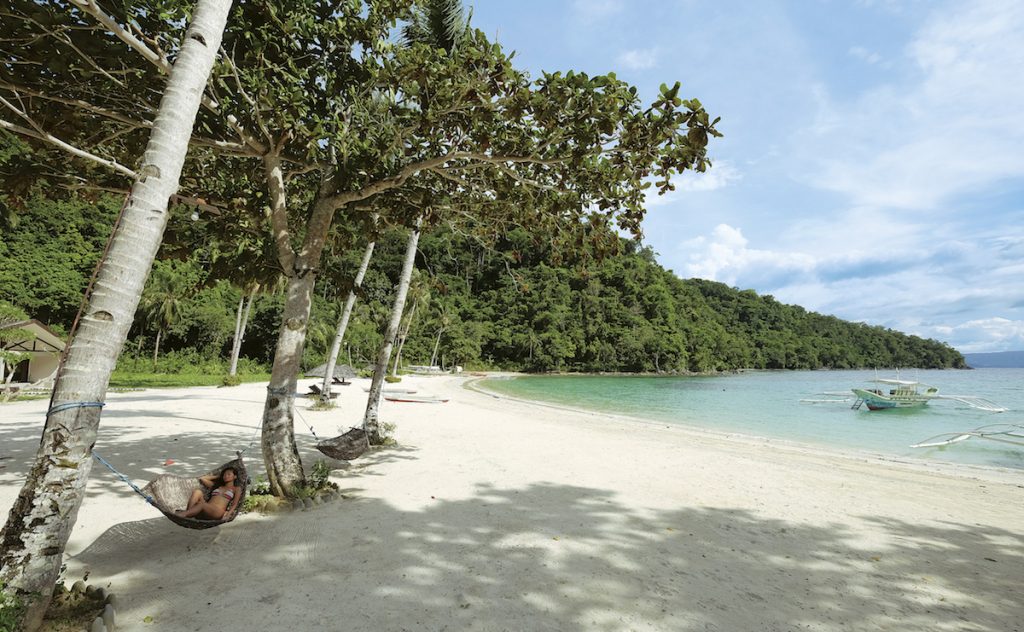
Jungle covered limestone headland jutting into the sea and waves breaking on the sand marking the southern end of Sugar Beach-Nauhang barangay. Sipalay-Negros Occidental-Western Visayas-Philippines.

This aptly-named beach in the sweet province of Negros Occidental is a destination that is known mostly to locals as Langub Beach. Locals love to spend their lazy summer afternoons swimming in its azure waters. Here, one can catch a beautiful sunset while listening to the waves and relaxing on the warm brown sand. Among the activities to try are snorkeling and paddle boarding, or simply taking a refreshing dip in the cooling blue waters. 
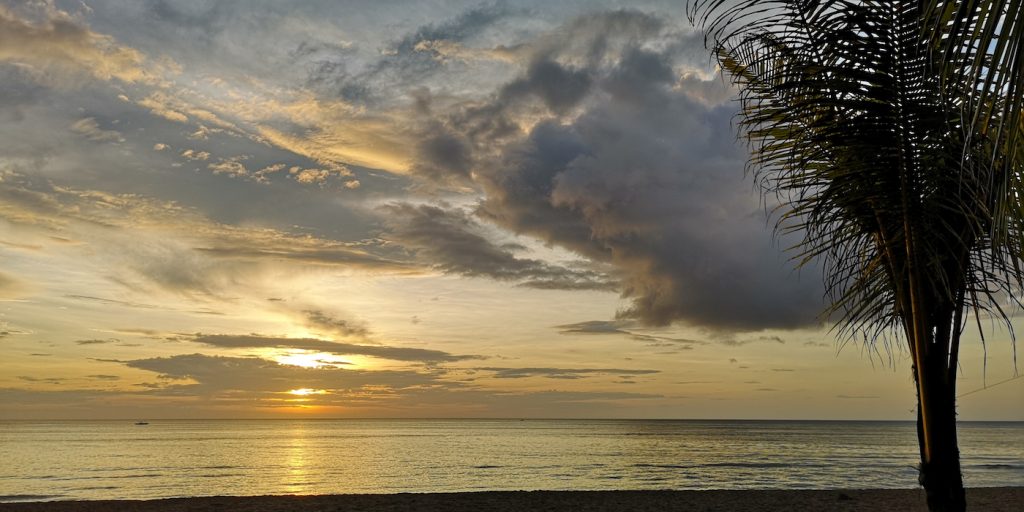
Sugar Beach in Sipalay, Negros Occidental

Mantigue Island, Camiguin Province

Mantigue Island

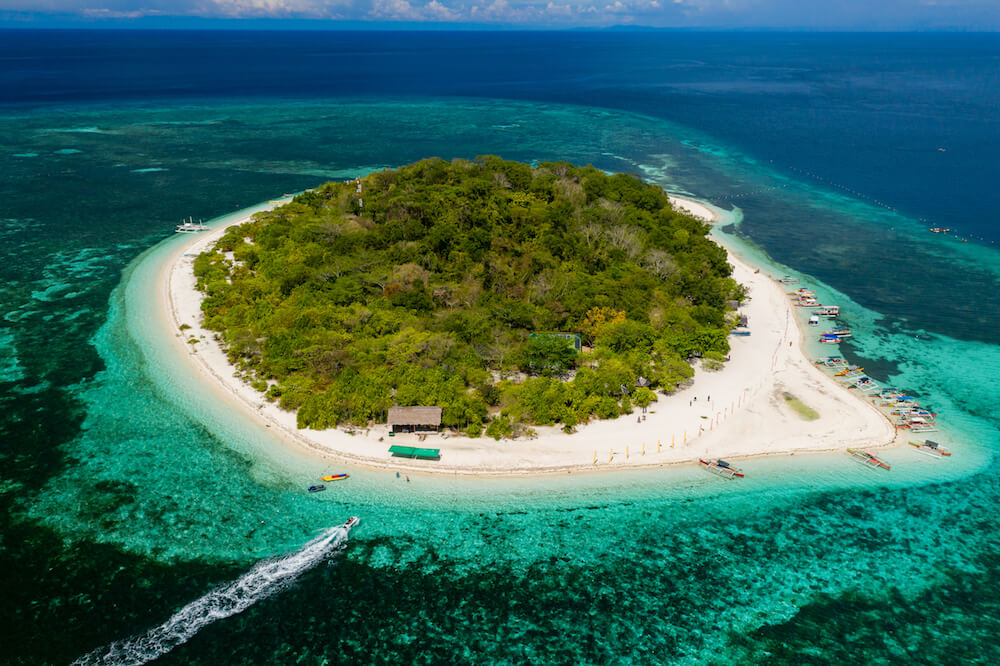
A 20-minute scenic boat trip from the eastern side of the alluring Camiguin Island brings travelers to this gleaming white sand island framed by lush greenery. Mantigue Island is a four-hectare slice of tropical wonderland famous among divers because of the endangered hawksbill turtle frequently sighted in its clear waters. This island is indeed a diver’s dream because it is teeming with colorful and rare marine creatures such as colorful clownfish, nudibranchs, frog fish, sharks, and dense schools of fish with a backdrop of amazing gardens of corals and seascapes. To complete your experience, you can admire the local wildlife of its mini tropical jungle, frolic among the waves, laze on the powdery sand, or you can grab a bite of the sea urchin (uni) offered by the locals on the beach right out of the ocean! There are no big crowds on the island as it is only open for day tours and the number of visitors are limited to help preserve its natural beauty.
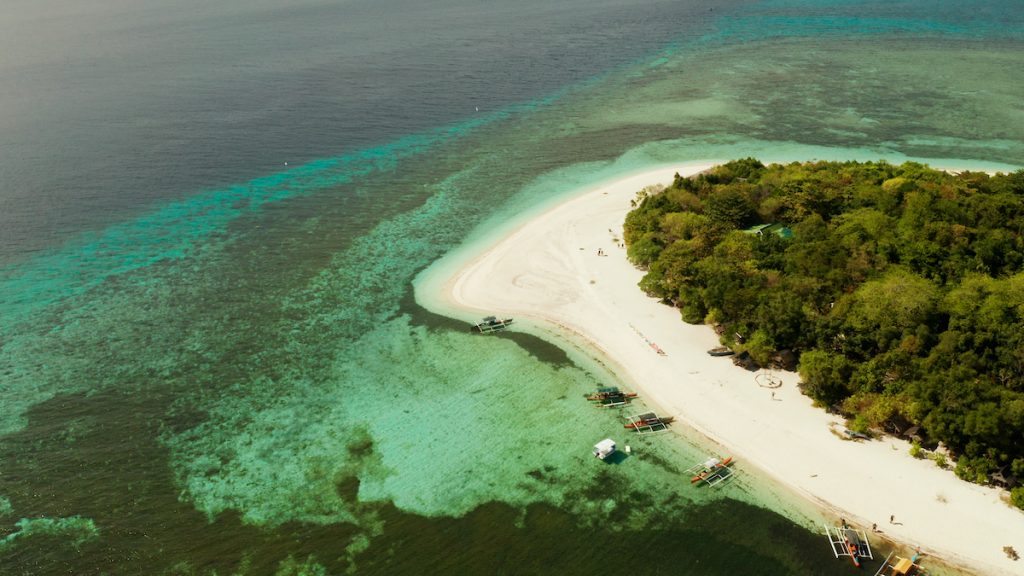
Mantigue Island

Guyam, Daku, and Naked Island, Surigao del Norte
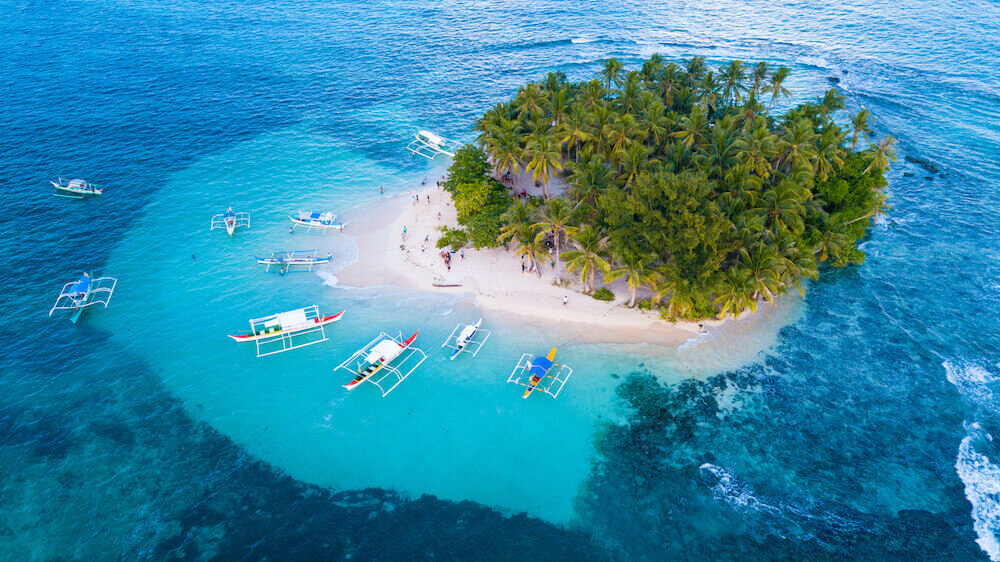
Guyam Island
Daku Island
Naked Island

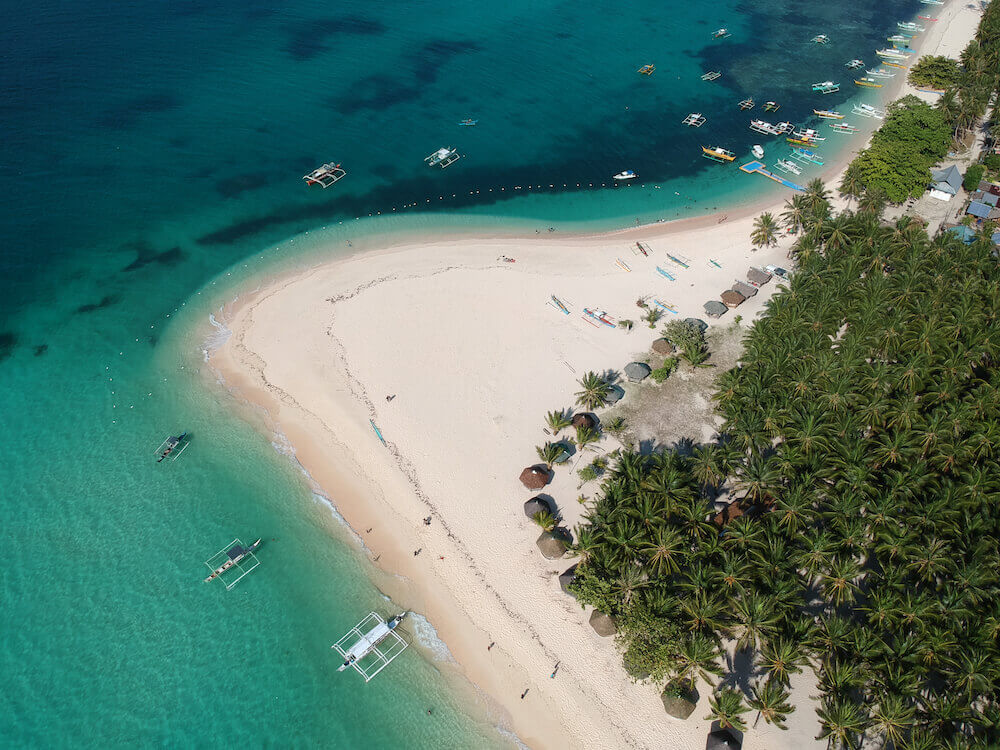
Siargao is fast becoming a favorite surfing destination for local and foreign enthusiasts, but for those who want to experience the more idyllic side of the province, they can book a boat tour that will take them island hopping for a whole day of enjoyment among small secluded sandbars. Guyam, Daku, and Naked Island are destinations for those who want to feel what it is like to live on a tiny remote island. Guyam is a small circular island with swaying coconut trees and beach huts, while Naked Island, as its name implies, is a bare beach with deep waters suited for scuba diving. Daku, which means ‘big’ in the local dialect, is large enough to be home to a small and friendly fishing community.    
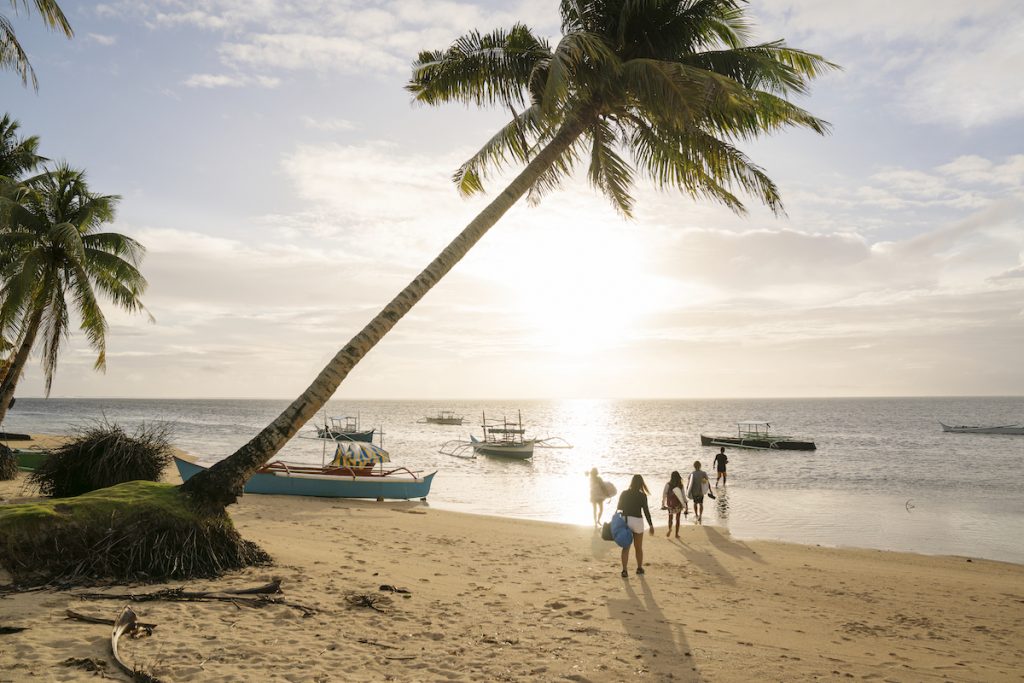
Daku Island

Calaguas Island, Camarines Norte

Calaguas Island, Camarines Norte (c/o John Harvey Perez)

The white sand and blue seawater of Calaguas Island in Camarines Norte has become a popular destination among local beach lovers who want to experience a quick getaway from urban life. Among the activities available for travelers aside from swimming and catching unobstructed sunrise and sunset views are heading to the neighboring Tinaga island to trek on its rolling hills.
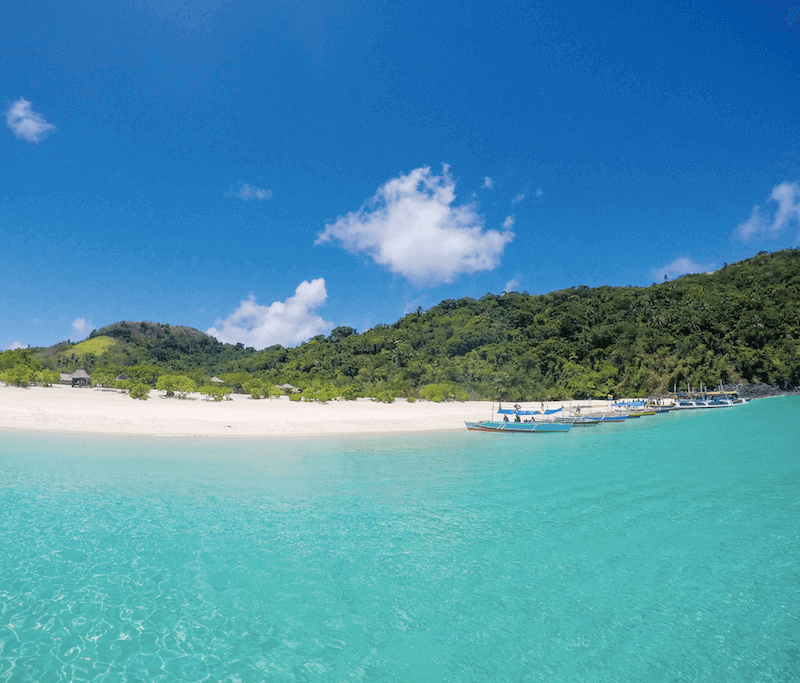
Calaguas Island, Camarines Norte

Travel safely to the Philippine shores

The Tourism Department, which has been awarded a SafeTravels Stamp by the World Travel and Tourism Council (WTTC) in recognition of its adoption of “health and hygiene global standardized protocols” that will ensure safe travel during the COVID-19 pandemic, conducts thorough inspection and assessment to ensure that only those who are accredited are allowed to open and receive guests.

To ensure that travel to these beautiful beaches will be a safe, the Tourism Department is enhancing its health and hygiene protocols, with tourism workers undergoing constant training and tourism establishments implementing standardized safeguards in their premises to protect their guests and employees.

The Philippine government through its Inter-Agency Task Force for the Management of Emerging Infectious Diseases (IATF) is constantly updating its protocols to safeguard Filipinos and foreign nationals who are traveling to the Philippines. To knowthe latest updates and travel advisories about the Philippines visit https://www.philippines.travel/safetrip (for Switzerland), https://morefunphilippines.de/ (for Germany) or download the Travel Philippines app at the Google Play Store and Apple App Store.
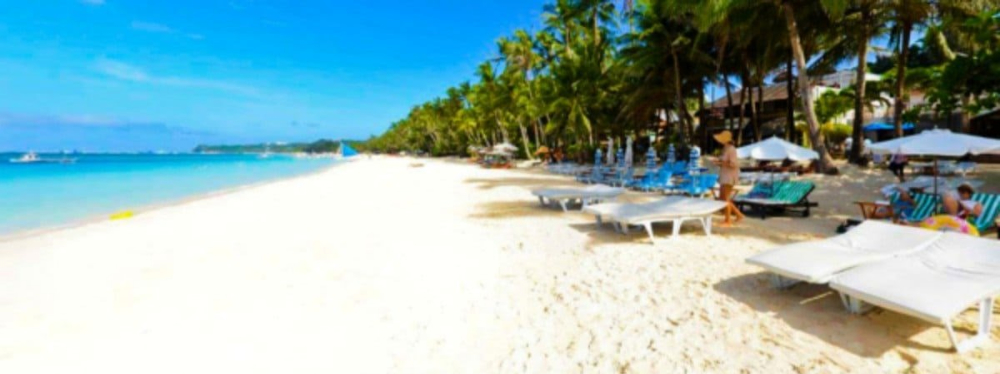
Twelve Beaches Near Manila

Looking for beaches to spend a summer vacation paradise? The Philippines is the perfect place to be in, especially if you are craving a beach getaway. But here’s the truth, once you land in Manila – the country’s capital city – you don’t have to go as far as Boracay or Cebu to get that beach experience you deserve. This archipelago is the home to some of the most fantastic and the finest sand-sea-and-sky combo you’ll see in your lifetime. 

Ask the city locals! There are pristine and fantastic beaches outside the metropolis, which are peaceful alternatives to notoriously crowded beaches. Lucky you, these beaches won’t take you too far from the city. Pack your bags and go on a road trip that would only take five hours at most! 

We listed 12 white sand beaches foreign tourists are dying to see in the Philippines. Now, let’s begin at the first stop! 

First Stop: Zambales

Anawangin Cove

Anawangin Cove is a beauty that resulted from a disaster. This famous Zambales paradise used to be a rocky coast until the eruption of Mt. Pinatubo in 1991. Tons of ash were dumped into the shore of San Antonio, resulting in fine white sand. The secluded crescent-shaped island is every beach bum’s paradise. 

Activities: Swimming, stargazing, mountain climbing, and strolling along the inlet. 

Travel Time: Depending on traffic, the time spent traveling from Manila is about 5 hours or more. 

Nagsasa Cove

A sea haven located in the same province, Nagsasa Beach boasts amazing ash-gray sand beautifully peppered with Agoho trees. It is also home to picture-perfect mountainscapes filled with bamboo and grass, and since it’s not spoiled and commercialized just yet, it’s the best place to go if you want some peace and quiet.

Activities: Strolling along with the scenic islet near the southern end of the tip, trekking to the Nagasa waterfalls, mountain climbing to the viewpoint, fishing, and swimming. 

Travel Time: 6 hours (4-5 hours bus ride to Santa Cruz + 20 minutes tricycle ride to Pundaquit + 30-40 minutes boat ride to Nagsasa Cove)

Crystal Beach

When people say that Surigao is the only surfing spot for surfers, they might not have visited much of the Philippines. Crystal Beach of San Narcisco, Zambales, is one of the favorite surf spots, especially with all the new highways bringing you from the Metro to Zambales. You can choose to stay overnight whether you go camping by the beach or book a hotel, or just pay the entrance fee of P895 (P395 is refundable) to enjoy the facilities. 

Have fun exploring the beach with the Zambales mountain ranges as your backdrop! 

Activities: Camping, surfing, swimming, beach volleyball, and massage. 

Travel Time: 3-4 hours from Manila (bus ride for Iba or Sta. Cruz + tricycle ride to Crystal Beach Resort) 

Second Stop: Batangas

Masasa Beach

Tingloy’s hidden gem will impress you if you seek a fun and relaxing beach adventure this summer. Sure, its calming waves will leave you speechless, but it’s the crystal clear and shallow water that leaves tourists wanting some more! 

Activities: Island hopping, trekking, diving, snorkeling, sunset viewing, sunrise viewing, and camping

Travel Time: 4 hours (2-3 hour LRT Buendia ride + 40-minute jeepney ride to Anilao Port + boat ride to Masasa Beach) 

Laiya Batangas

One of the closest beaches in Manila lies in Batangas. It’s just a two and a half bus ride away from the city, so you won’t have to travel long to enjoy beach bumming in Laiya. The beach is a long stretch of breath-taking white sand lined up with palm trees and sparkling blue water that create a picturesque view. A favorite beach weekend getaway of the people from Manila or nearby cities.

Activities: Resorts along the coastline have different activities for guests like banana boats, jet skis, kayaks, and many more. Plus volleyball, ultimate Frisbee, diving, and snorkeling! 

Travel Time: 2-3 hours 

Third Stop: La Union

San Juan, La Union

This beach is home to the nearest surfing spots that are nearest to Manila. Urbiztondo and Bocnotan for beginners, Monaliza for intermediates, and Carrille Point for advanced surfers are the most popular surf spots in La Union. Beach lovers may not only enjoy the fine black sand of San Juan but its beachbreak also offers highly consistent waves for beginners or surf school students,   considering it as one of the main attractions. Prepare to ride along the waves in La Union! 

Activities: Surfing (for advanced and beginner surfers), enjoy the nightlife, staycation, sunset viewing, culinary tour, visit Bahay na Bato.

Travel Time: 4 hours

Fourth Stop: Puerto Galera

White Beach

It is a long stretch of white sandy shores dotted with bars, restaurants, and resorts. It offers a variety of watersports activities and a vibrant nightlife. About 5 miles away from the town proper is a Mangyan village, a community of indigenous tribes of Mindoro, where you can buy local arts and crafts and interact with the local community

Activities: scuba diving, parasailing, snorkeling, swimming, flyboarding, and jet-skiing

Travel Time: 3-4 hours

Fifth Stop: Pangasinan

Hundred Islands

Boasting 124 islands at low tide and 123 islands at high tide scattered along the Lingayen Gulf, Hundred Islands National Park has beaches where you can dip into its serene waters and see the fantastic natural spots. Every island’s vantage point is a picturesque panoramic, Instagramable shot. 

This destination from Alaminos, Pangasinan, is known for its great inland and underwater flora and fauna. Every step, you’ll feel the fine sand and greet every friendly local islander. Never miss the islands’ stunning sunset. Or perhaps do trekking at Governor’s Island that offers a breathtaking panoramic view of the Hundred Islands at its highest point. For adventure seekers, experience cliff diving, rappelling, wall climbing, and ziplining in Quezon and Marcos Islands. 

Activities:  Swimming, kayaking in Children’s islands, snorkeling, ziplining (Governor’s Island to Virgin Island), wall climbing and rappelling (Quezon Island), and trekking. 

Travel Time: 4 to 6 hours

Sixth Stop: Bataan

Laki Beach

Beachgoers everywhere will be in awe of this privately-owned beach nearby Five Fingers Cove. This virgin beach is ideal for those traveling on a budget because its cottage rental fee and camping fee are free. Their entrance fee is P300 (day trip) and P400 for those staying overnight. Expect to enjoy the beach’s tranquil atmosphere where you can have a breath of fresh air!

Activities: swimming, lazing around, and even cliff diving.

Travel Time: 3 hours away

Seventh Stop: Baler

Sabang Beach

This Baler wonder is known as the birthplace of surfing. Sabang Beach is a two-kilometer stretch of gray sand widely known among surfers and beach bums. This beach provides frequent waves, which makes it the best surfing spot in the country alongside Siargao. Experience the level of surfing like never before!

Activities: Surfing, swimming, sunset viewing (where you’ll see the sky become cotton pink and bubblegum blue), and of course, a food trip! 

Travel Time: 5.5 hours 

Eight Stop: Pagudpud

Saud Beach

Situated in Pagudpud is this stunner called Saud Beach. This long-stretch beach of creamy white sand and shore consists of teal waters, coconut trees, and thrilling waves. Plus, it is among the 25 Most Beautiful Beaches in the world listed by Travel+Leisure magazine.

Activities: Romantic walks during twilight, sunset watching, and water activities like sailing and snorkeling. Don’t forget your food trip to some of the finest local restaurants and canteens!

Travel Time: 10 hours

Last Stop: Sta. Ana in Cagayan

The last stop! One of the regions in the Philippines you’ll fall in love with due to the beauty of the breathtaking hills and mountains. With cool breeze, historical landmarks and electrifying festivals, Sta. Ana in Cagayan is a must-stop destination!

Palaui Island

White sands, blue-green waters, and rich marine life. These make Cagayan a tourist attraction worth your attention. This place exudes mystique itself. With the scenic terrain and the gigantic waves, you will notice its distinctive charm you can explore!

Check out the Siwangag Cove for fun nature sightseeing. Snorkel into the ocean, where you can see the beauty of the sea underneath. Experience the joy of the Viray Festival held every 26th-30th of May. Visit Anguib Beach, Nangaramoan Beach, Pozo Robo Beach, Jerolinda Beach, and Buacag Falls in mainland Sta. Ana

Activities: Trek to Cape Engaño Lighthouse in Cape Engaño Point, snorkeling and scuba diving, birdwatching, skimboarding (with your own board), exploring the nearby Crocodile, Mapurao, and Manidad Islands, and camping.

Travel time: 10 hours

Discover Philippine beaches!

So there you go, the top ten white sand beaches in the Philippines near Manila! See? You don’t have to go far from the city to see the beauty of the Philippines. What are you waiting for? Book early cheap flights to Manila, Philippines, and discover the Philippines’ 7,107 islands on your next spring vacation!

7 Best Homegrown Bean-to-Bar Filipino Chocolates

Filipinos’ love for chocolate is undeniable. Chocolates are the ultimate dessert or snack for many; it’s one of the best pick-me-up foods when you feel sad and blue. It’s also a popular gift every Valentine’s Day, anniversaries, and special occasions. One thing’s for sure, chocolates are still a hit. But, do you know the main secret ingredient of chocolate? It’s Cacao.

Cacao, scientifically known as Theobroma cacao, has been revered in history as the “food of the gods.” In the Philippines, cacao first became part of our culture when it was first introduced to the early Filipinos in the mid-17th century during the galleon trade. Today, the rise of cacao and the Philippine chocolate industry has been rapid as its products and raw materials bagged numerous international awards. 

Global recognition does bring pride to the country, which encourages more farmers to plant cacao. With the rise of the chocolate industry also comes the market and creation of artisan chocolate. This article features seven (7) of the country’s best homegrown chocolate producers and sellers supporting farms that adhere to sustainable agricultural practices. Sustainability is their businesses’ standard pillar. So, you don’t only have the pleasure of eating chocolate, but you will experience a happy journey from seed to table. 

  1. Casa De Cacao & The Chocolate Chamber

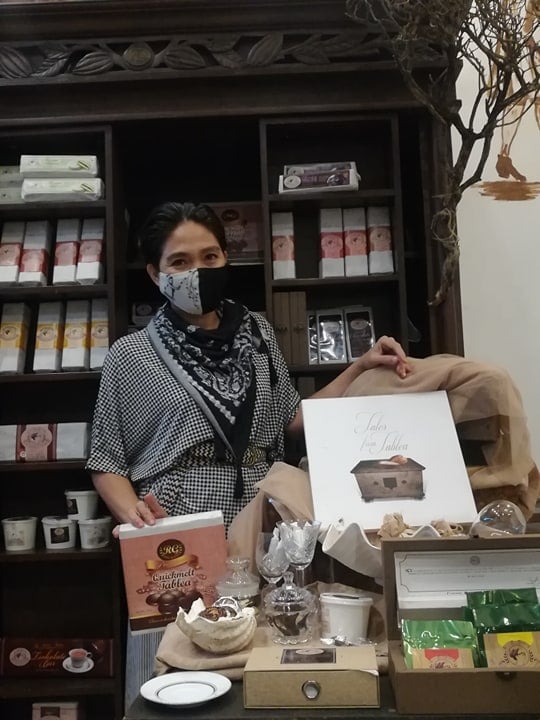
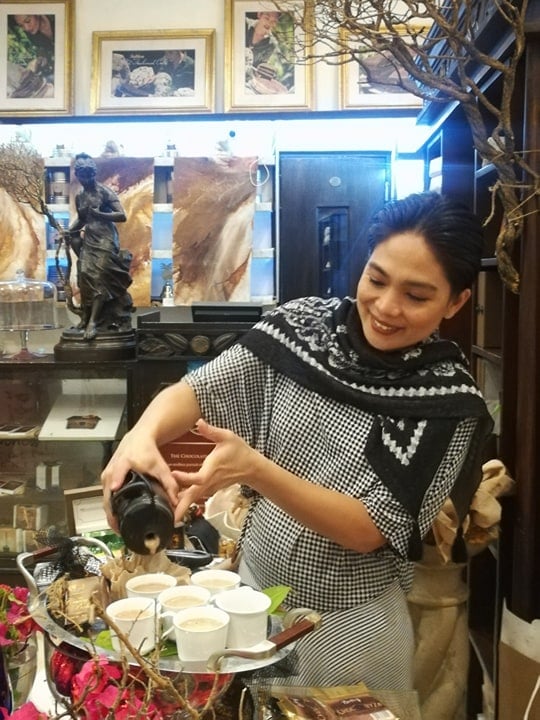
For the Chocolate Queen of Cebu Raquel T. Choa, chocolate is more than just a dessert. Taking you on a Cacao Journey at Casa de Cacao (Chocolate Appreciation Tours) and The Chocolate Chamber (retail store), she will tell you her stories — The Legend of Maria Cacao —– which will capture your imagination while sipping hot “sikwate” perfected by Raquel herself. 

Her chocolate creations made from pure cacao beans will fill your heart and palate with the different notes and flavors of cacao that’s as colorful and flavorful as life itself. 

Once known as the ‘food of the gods,” cacao takes the main stage in the Chocolate Appreciation Tours of Raquel and is celebrated and enjoyed as it once had been. 

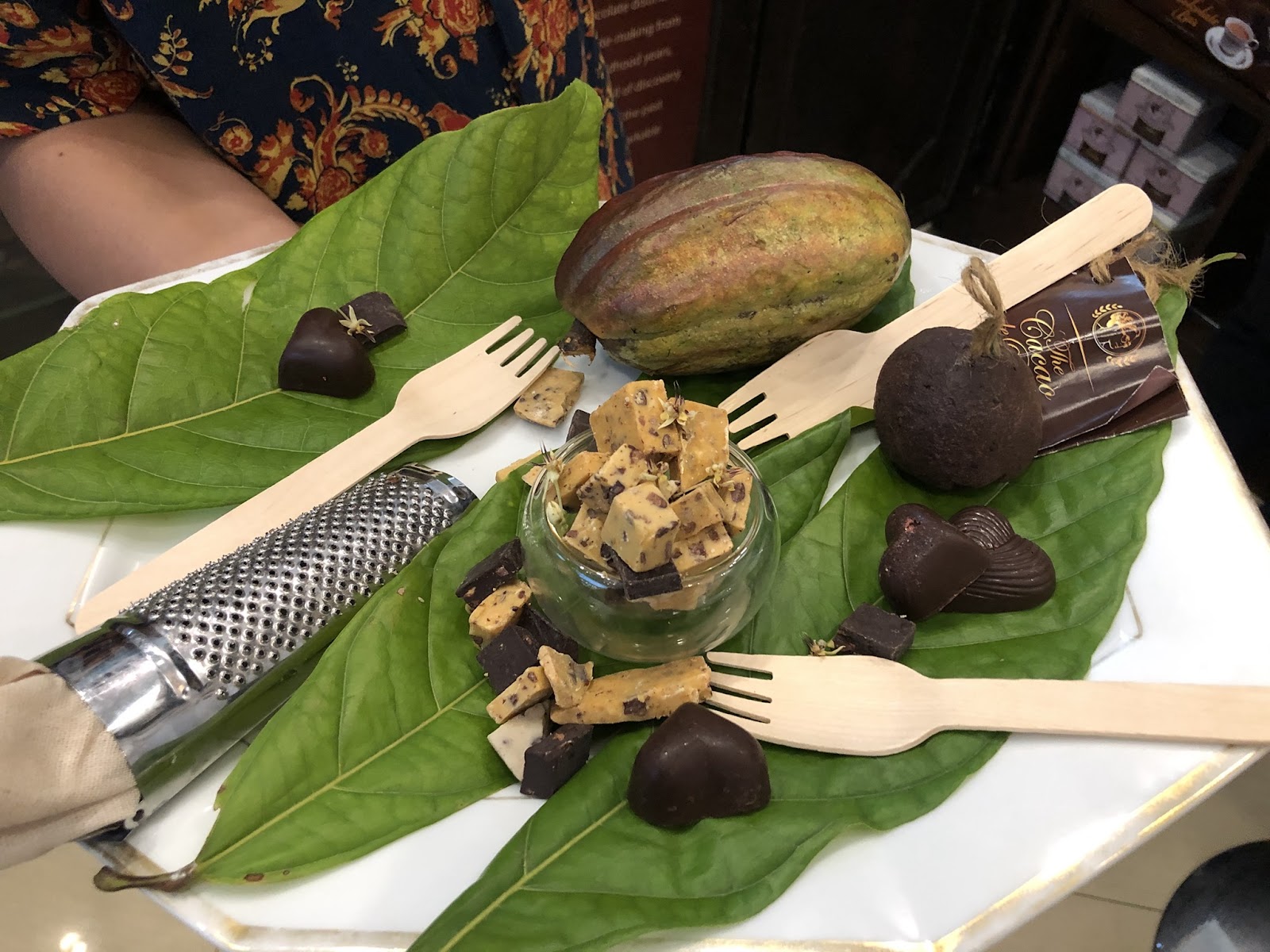
At Casa de Cacao and The Chocolate Chamber, you will be able to taste the myriad of flavors of cacao, and try out their chocolate creations, such as the Quickmelt Tablea, White/Dark Chocolate with Cacao Nibs, Cacao de Bola, Choco Cayenne, Tsokolate Bar, Choco Nib Oatmeal Cookies, Fartufini, Flavored Chocolate Powder, and Raquel’s newest creation, Moringa Alfajores  — crumbly vanilla-malunggay cookies filled with tablea caramel and coated with white chocolate and malunggay. 

Behind her achievements as an entrepreneur, Raquel is driven by a purpose – her advocacy to uplift the Filipino chocolate, the Philippine Cacao industry and support farmers –  making her and her chocolate creations all the more admirable.

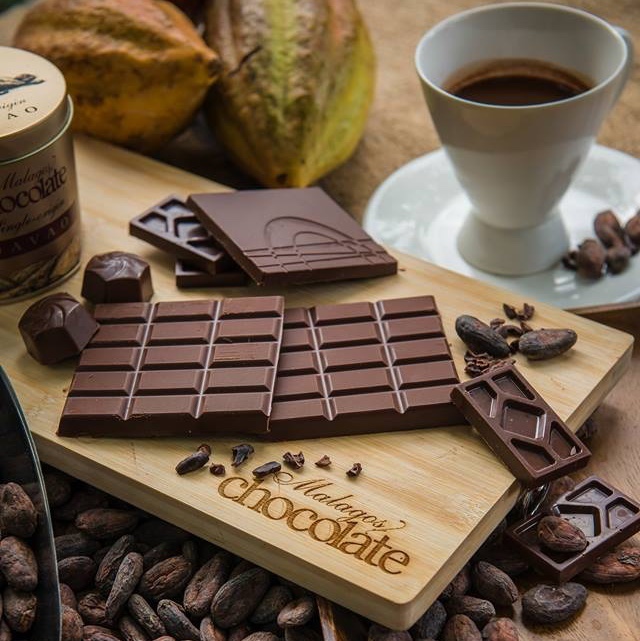
  1. Malagos Chocolate 

Taken from Malagos Chocolate’s Facebook Page

As one of the most popular locally-made chocolate brands in the Philippines, Malagos Chocolate has captivated the meticulous taste of global chocolate lovers for its unique and superb taste. 

Malagos Chocolate is situated in Davao, dubbed as the Cacao Capital of the Philippines, and responsible for 80% of the country’s production.  The city’s environment where it’s grown, including the climate and genetics, influences the taste of the chocolate and its signature chocolate flavor and notes. Malagos Chocolate has also received international recognition and awards.

Taken from Malagos Chocolate’s Facebook Page

The farm has a Malagos Garden Resort, where you can stay overnight or spend a day tour around the country’s first chocolate museum and experience a Tree-To-Bar Tour, chocolate-making activity, or pamper yourself with a chocolate spa. Founded by mother-son tandem Roberto and Charita Puentespina, Malagos has welcomed guests since 1994 and is now deemed as one of Davao’s top tourist spots. 

  1. Dalareich Chocolate House 

Credits to: Dalareich Chocolate House 

Where else could chocolate be discovered than in the land of the Chocolate Hills – Bohol? With so much Spanish influence across Bohol island, cacao has become part of Boholanos’ culture. Each Boholano household has at least one to three (1-3) Cacao trees planted in their backyard. No wonder the Polot family founded the Dalareich Chocolate House in Bohol that received international recognition from the London-based Academy of Chocolate Awards in 2019. 

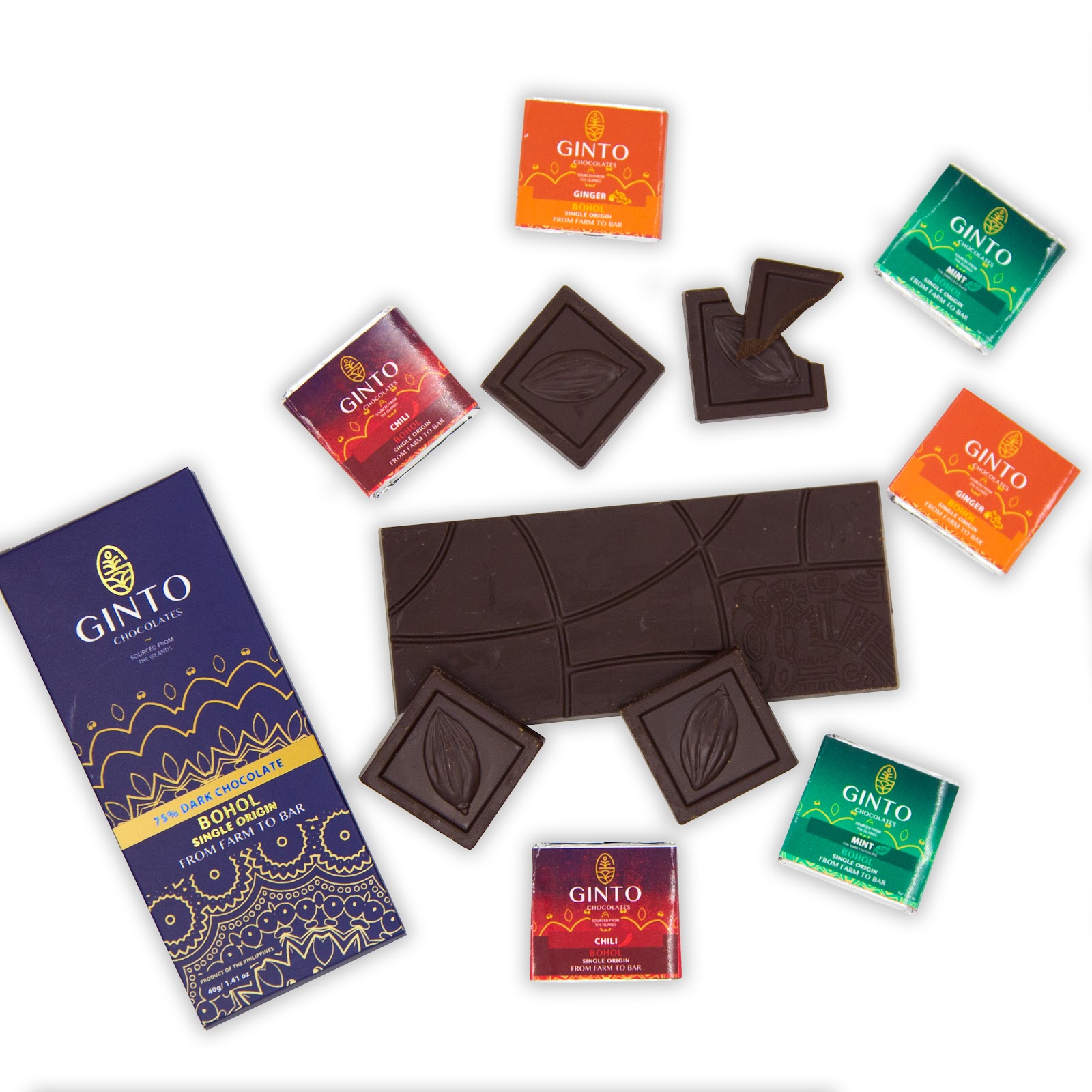
It has a Ginto Chocolates social enterprise that makes bean-to-bar chocolates from locally grown cacao trees planted by local farmers. Aside from its renowned Tablea, a local chocolate drink, this family business also advocates for an ‘Adopt a Cacao Tree and Preserve’s Bohol Cacao Heritage’ project to preserve and rehabilitate heirloom cacao trees and help the farmers earn more income for their families. 

Looking for a luxury treat, try its Oro Single Chocolate Bar, which is 75 percent dark chocolate that comes in plain, mint, chili, and coconut flavors. Or, surprise your loved ones with a box of 12 assorted chocolate pralines with fillings of wine and honey, which is one of its Ginto Luxury Chocolates brands. A dried mango or a dried pineapple coated with dark chocolate could be another chocolate choice while shopping at Dalareich. Its chocolate flavor is a combination of the sweet to the sour taste of mango and the bitterness of single-origin dark chocolate. 

Dalareich Chocolate House also has a farm where guests can fall in love with their Filipino chocolates even more. Guests will learn about the story behind Dalareich and discover the process of chocolate making and the brief history of cacao in the Philippines. Guests are also expected to witness the life of the hardworking farmers and taste the cacao fruits. To book a farm tour or buy its products, you may check out www.dalareichchocolatehouse.com or book through your favorite Travel Agent or Travel Advisor. 

  1. Cacao Culture

Credits to Cacao Culture Philippines 

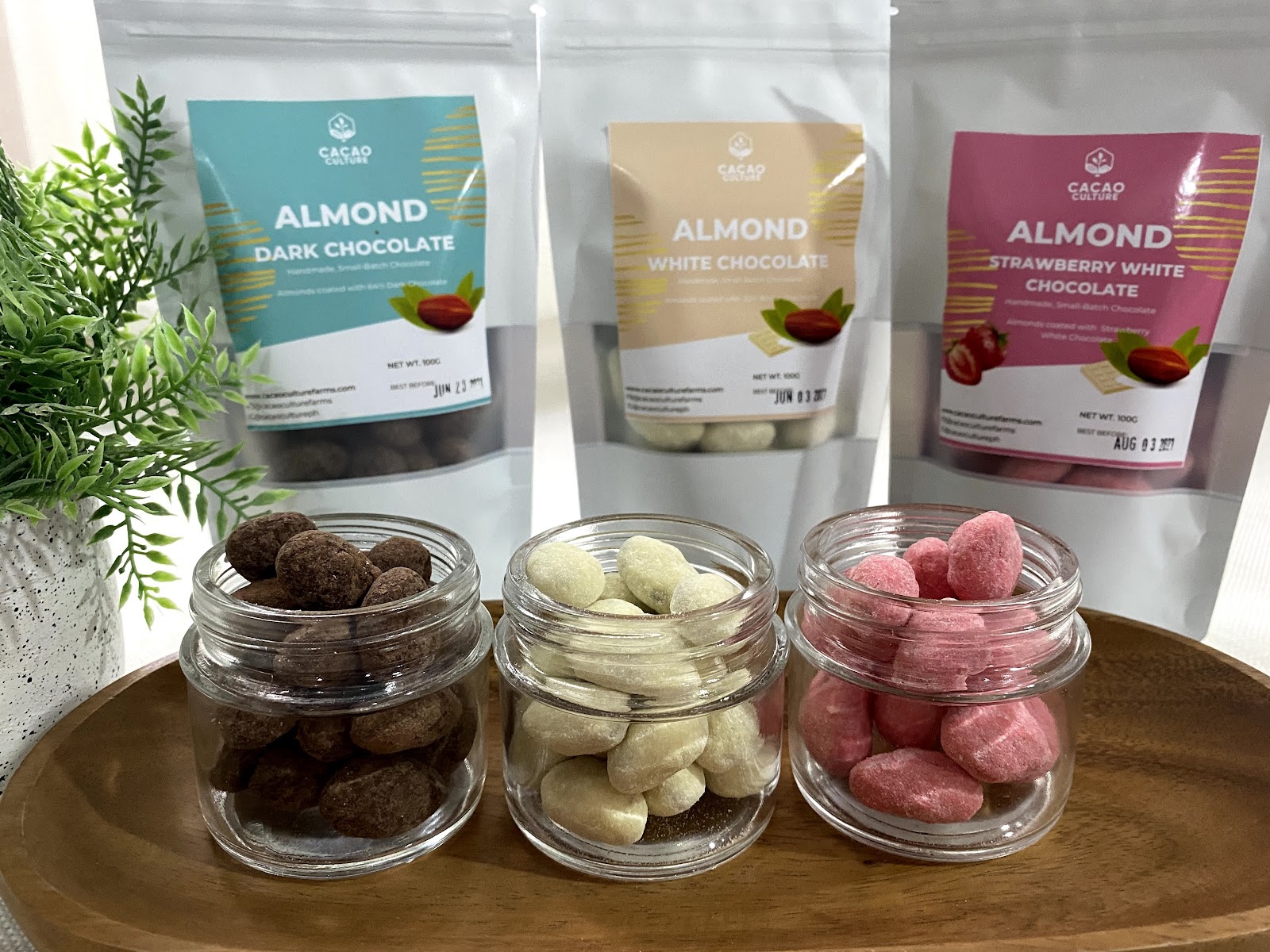
This is another chocolate producer from the Cacao Capital of the Philippines, Davao City.  Cacao Culture is known to produce Cacao Butter and Chunks, Roasted Cacao Nibs with Coconut Sugar, Chocolate Covered Mango Strips. 

Taken from Auro Chocolate’s Facebook Page 

Its internationally awarded premium bean-to-bar chocolate brand, Auro Chocolate, is rooted in sustainability (buy beans from local farmers) and  raised the bar high when it comes to creating high-quality artisan chocolate.

Auro Chocolate offers a wide variety of flavors that will leave a mark on your palette. It fulfills any chocolate lover’s wish with its plain dark and white chocolates. Also in its  product line is the chocolate bar with cashews, cacao nibs, and banana chips. 

Another of its award-winning artisan chocolate brands is Theo + Philo is one of the first Philippine chocolate makers to make their chocolate exclusively with local cacao. What makes them different is that they mix distinct and unique Filipino flavors like coconut and mango. 

5. Risa Chocolates

Taken from Risa Chocolate’s Facebook Page

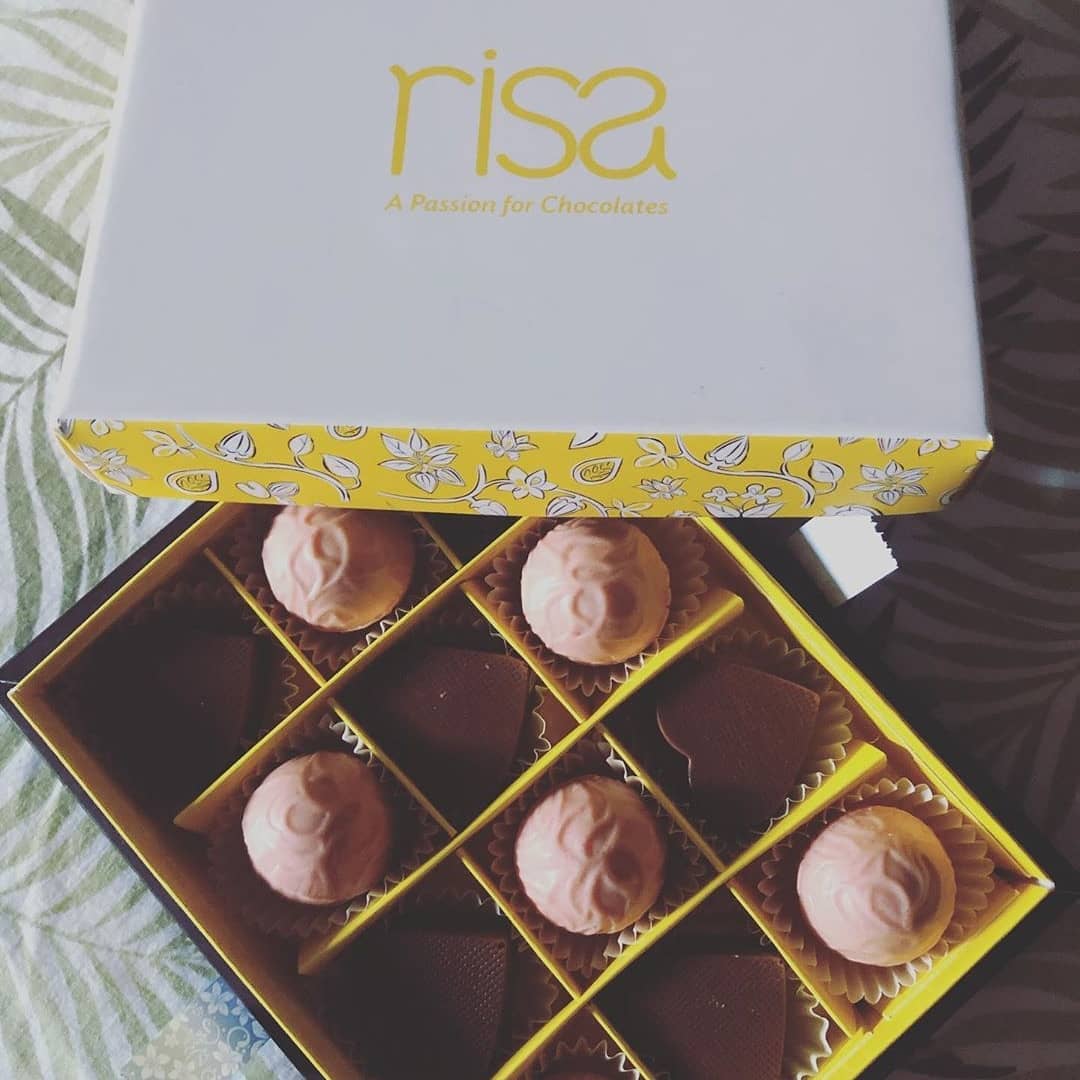
What started as a stall in a pop-up shop and bazaars now became  one of the most sought-after chocolate brands in the country and worldwide. A chocolate seller from the south, Risa is a one-of-a-kind premium handmade chocolate that leaves a lasting impression. It is made with high-quality cacao beans coming from South Cotabato in Mindanao. You will drool from its unique chocolate flavors such as bacon chili chocolate, brown butter chocolate, and Cerveza Negros truffles. 

6. Tigre y Oliva Chocolate

An Italian craft chocolatier ventured on social entrepreneurship, working with cacao farmers in the Philippines and creating an emerging chocolate brand, Tigre y Olivia, in La Union. It is known for its handcraft and single-origin chocolate bars that every Chocolate lover must try. 

7. Hiraya Filipino Bean-To-Bar Chocolates

Hiraya is a chocolate brand that merges comfort and newness into its products. One of its popular products is the 72% dark chocolate bar, where you can taste its fruitiness with a hint of a bitter taste. Hiraya  also experimented with flavors such as chicharron, coconut, and queso de bola. Its products are all-natural and handcrafted , which fits well for vegans. It sources their beans from Davao to help farmers make their living through direct and fair trade, adopting a sustainable and socially conscious practice into its brand. 

Discover these award-winning chocolate producers and sellers in the Philippines!

You can check out all of these chocolate producers and sellers in the Philippines. But first, don’t miss the opportunity to grab one of our packages here. 

The Best Brews in the Philippines

For coffee lovers, the Philippines could be a place for you to explore and experience its local coffee shops while tasting and smelling the addictive aroma of its signature local coffee from Lipa City in Batangas, where the first coffee beans were introduced by a Spanish Priest in 1800, to the metropolitan cities of Manila, Davao, and Cagayan de Oro, and the mountain ranges of Sagada, Benguet, Bukidnon, South Cotabato, and Davao.

Coffee isn’t just a trend. It’s also a cultural symbol not only in pop culture but everywhere in the world. There are many reasons why coffee shops are the most visited in the world, especially coffee shops in the Philippines. For some, it also has become a cozy place to catch up with friends and chatter.

Coffee has been an essential commodity in the Philippines, not only for students and working people but also for the tourists who wanted to experience and taste Philippine coffee in an atmosphere like no other. The warm, cozy, mom and pop, or open-air ambiance of coffee shops become hangout spots for individuals, friends, students and professionals, local and foreign visitors from all walks of life, whether young or old.

Pep up your trip to the Philippines by discovering the unique flavors of Philippine coffee while tasting the best brews found in all three major islands.

Top 9 Coffee Shops in the Philippines

Bo’s Coffee

Bo’s Coffee

Bo’s Coffee’s primary focus is offering an entirely homegrown coffee experience to the locals and tourists. They don’t only sell the beans, but they also use them in the beverages they make in their coffee shops.

They provide a wide array of beans from Sagada, Benguet, Mt. Apo in Davao, and Mt. Matumtum in South Cotabato. The beans from Sagada give out a nutty taste with tobacco notes. The Benguet beans have a wine taste with an herbal kick. Mt. Apo beans give an earthy flavor, while beans from Mt. Matumtum has a berry taste with a kick of spice.

Location: You can find Bo’s Coffee in major cities in the Philippines such as Makati City, Quezon City, Cebu City, Dumaguete City, Cagayan de Oro and Davao City.

Kalsada Coffee

To connect to her heritage and her home country, the Pacific Northwest-raised Carmel Laurino founded Kalsada. Photographs showing “kapeng barako” sold in the Seattle market in 1909 became her inspiration for opening her coffee business. Today, her coffee shops cater to coffee lovers in four American cities and Manila.

They source beans from Belis, Benguet that give out a vanilla taste and floral aroma. Expect to taste notes of cacao, nutmeg, cardamom, and all-spice in your drink. Another win for the company is their support for the farmers as they pay over 50 pesos per pound of beans.

Location: Kalsada has branches in Seattle, New York, Chicago, San Francisco, and Manila.

Figaro

Figaro serves coffee made from freshly-roasted beans sourced from all over the Philippines. The coffee shop prides on their fresh beans roasted every week before they deliver them to all the stores. Through this, customers can enjoy a fresh cup of coffee while enjoying it’s European-style ambiance.

The coffee shop has come a long way since it’s opening in 1993, with over 90 branches worldwide. Today, the brand has become a prime example of what a Filipino world-class coffee brand can become.

As for the menu, they created a lineup of their old and new favorites that fits anyone’s pallette. It is a medley of Western cuisine (Chicken Caesar Salad and BBQ Pulled Pork Sandwich) and a touch of Filipino flavors such as their classic Magandang Umaga Platter, our version of a breakfast platter.

Coffee shop gems in Luzon

El Union in La Union

If you are looking for a hip, open-air cafe atmosphere by the beachside or in a surf town, La Union is the best place. El Union is Instagram-worthy, with #ShirtlessBaristas making good coffee from high-quality local beans and specialty drinks. The coffee shop from one of the Philippines’ surfing capitals serves homegrown coffee and drinks, including a specialty cup of Nitro Cold Brew on draft and a cup of Dirty Horchata, which is a shot of espresso mixed with a rice-milk. This surf town cafe is frequently visited by surfers, surf enthusiasts, and Manila folks who spend their weekends in Elyu or La Union.

They serve high-quality local beans from farmers in the Cordilleras, Benguet, Mt. Apo, Cagayan De Oro, and Bukidnon and blend the roasted beans with Panama, Brazil, and Ethiopia El Union is a popular spot for celebrity tourists. In fact, they once served coffee to Martha Stewart when she visited the country.

Location: The Great Northwest Travel Shop & Viewing Deck, MacArthur Highway, San Juan, La Union

Cafe de Lipa in Lipa, Batangas

Why not start your day at “Cafe de Lipa, the most popular coffee shop located in Lipa City in Batangas, which is the birthplace of Philippine coffee. Cafe de Lipa serves Kapeng Barako (a Liberica species), from Tagalog words, a male stud bull or wild boar, due to its strong and bold flavor. Its historical significance dates back as early as 1800 when a Spanish Franciscan monk introduced coffee in the Philippines. Mostly for Filipinos, Kapeng Barako invokes memories of their parents sipping it early in the morning, a cultural staple for more than 200 years. In fact, the owners were able to trace their lineage to two family members who helped propagate the country’s first coffee trees.

They source their beans in different parts of the coffee, including Robusta from Cavite, Ilocos, Basilan, and Arabica from Benguet, Bukidnon, and Cotabato. You can expect authentically and high-quality coffee served in the cafe.

Best Drink: Barakok Joe. It’s their homage to the classic signature brew.

Location: You can find Cafe de Lipa in three different locations in Lipa City (The Outlets, STAR Tollway, Brgy. Tibig, and at Mataasnalupa, Lipa City). You can also visit its Taguig City Branch located at the ground floor of Market! Market!

Bana’s Coffee (Sagada)

Once a set of a beloved Filipino romantic comedy movie “That Thing Called Tadhana” (That Thing Called Destiny), Sagada has become one of the country’s top tourist spots not only by local travelers but also by foreign visitors. Sagada prides itself on its rich coffee beans. Hence, there is a coffee shop found within the rich highlands.

Bana’s Coffee is famous for its Arabica house blend and Kape Alamid, coffee made from civet cats’ droppings. You can enjoy a world-class coffee while looking at the gorgeous view of its balcony.

The cafe is also renowned internationally. It won the Medaille Gourmet in the “International Contest of Coffees Roasted in their Countries of Origin” in 2017, awarded in Paris, France.

Location: South Road, Poblacion, Sagada

The Visayas Concoction

Balsa Kafe and Agri-tourism Hub in Leyte

Leyte’s must-visit destination is known for its scenic view, serene atmosphere, and great coffee. The Balsa Kafe and Agri-tourism Hub is known for its rich coffee that every tourist wants to start their day with. This cafe and hub work with the local farmers and farming communities around the area, where they source their fresh produce and local coffee.

Location: Brgy. Bogasong, Libagon, Southern Leyte

Madge Cafe in Iloilo

This cafe has become an Iloilo icon where tourists stop here to dig into their breakfast menu before exploring the town. Serving since 1951, they are using its original pre-war concoction and source their beans from the northern parts of Iloilo and Guimaras.

What’s more impressive is that they traditionally prepare their coffee using a culador (flannel sieve), holding and boosting the flavor as layers of beans are added.

Location: Lapaz, Iloilo City

Coffee Culture Roastery (Bacolod)

The country’s City of Smiles is every food lover’s paradise as they come to the city for its iconic chicken inasal. But, what most people don’t know is that the province’s cafe culture is rising.

Found here is the town’s first artisan coffee roaster, Coffee Culture Roastery, where they source their beans from Philippine local farmers.

Best Drink: Negros Blend. Baristas use a mix of Robusta and Arabica beans from Negros Island’s Mt. Kanlaon, with hints of dark chocolate and roasted nuts.

Location: Alijis Road, Bacolod City, Negros Occidental (Besides 7-eleven)

Mindanao’s brew

Bukidnon Brew Cafe

This family-owned cafe is one of Bukidnon’s favorite coffee shops and hangout places for people of different ages. Located in the city of Malabalay, this coffee shop prides itself in brewing and serving the traditional Monk’s Blend coffee, beans grown and produced by Benedictine Monks in the area.

Location: Bonifacio Dr., Malaybalay, Bukidnon

Travel now in the Philippines

For a country like the Philippines, a cup of coffee means a lot to local farmers. You support their farms while advocating ethical and sustainable farming and embracing the Philippine coffee culture of Kape Tayo!

Kape Tayo (Let’s have coffee) is the Filipinos highest form of endearment, inviting you for a cup of coffee at home, in an office, or a coffee shop where you can have intimate or deep conversations.

If you want to taste our local coffee in all three islands, come and visit the Philippines. Book your travel now!

Experience the Philippines’ award-winning destinations: Palawan, Cebu, Boracay, Siargao, Intramuros, and Batangas

Boracay, Philippines

Known as one of the top destinations in the world, it is no wonder that the Philippines has been winning awards for its world-renowned best beaches, diving tourism, and even its tourism campaigns. In this blog, we celebrate the many wins for the Philippines; more specifically, the awards garnered by the Philippine tourism industry.

The 2020 World Travel Awards Asia

Intramuros, Manila

This awarding body has contributed to the rising global tourism standards through giving awards to brands and best practices from the best travel, tourism, and hospitality industries every year. And last year, the Philippines’s Department of Tourism was declared the 2020s Leading Tourist Board in Asia out of the 11 countries nominated. 

For the fourth time in a row, its majestic beaches have won as Asia’s Leading Beach Destination. For the second time, the award-giving body recognized these beaches as Asia’s Leading Dive Destination.

Siargao won as World’s Leading Island Destination, and Intramuros won as the World’s Leading Tourist Attraction. 

Travel + Leisure World’s Best Awards 2020

Coron, Palawan

The world-renowned travel magazine awarded Palawan as the Best Island in the World. This tourist attraction is rated by the lifestyle sites reader for 94/83 out of 100 for its striking limestone cliffs extending directly from the ocean, the seascape in its dramatic way. Its white sandy beaches with palm trees are to-die-for. And, did we forget to mention its crystal clear waters? It looks straight out of a million-dollar art piece. 

One of the reviews also noted its world-class scuba diving to discover and explore the World War II shipwrecks. A piece of nature and history enveloped in one destination. 

Travelers can enjoy the traditional Filipino culture as locals celebrate festivals with float parades and costumes. 

Conde Nast Traveller Readers Choice Awards

Siargao Island

Aside from Palawan, other islands were recognized as the best in Asia. Conde Nast Traveller’s annual Reader’s Choice Awards named Cebu and the Visayas as the Best Island In Asia, scoring 95.83 out of 100. 

Other islands, Palawan, Siargao, and Boracay, also made it to the Top 10 in the Asia list, ranking fourth, fifth and sixth, respectively. Although Boracay is part of Western Visayas, it was submitted as a separate entry.

None of its major island groups –  Cebu, Bohol, Siquijor, Negros, Guimaras, Panay, Romblon, Samar, and Leyte – all pose its charm simplistic white sand beaches to its picturesque crystal clear water. 

These islands also have a significant historical value. Explorer Ferdinand Magellan first set foot in the Mactan Island in Cebu, where he introduced Catholicization. Some of the bloodiest battles were fought on these islands. One of these was against the Japanese during World War II. It is in Leyte where General Douglas MacArthur made his famous promise, “I shall return.”

World Spa Awards

Our spa and wellness brands, including Conrad Spa Manila, Aman Spa at Amanpulo, and The Farm at San Benito, bagged three awards in the 6th edition of the World Spa Awards. 

Conrad Spa won as Philippines’ Best Hotel Spa and bested other famous luxury hotel spas in the country like Willow Stream Spa at Raffles Manila. The said luxury spa facility is famous for its unique pampering and relaxation experience, boasting its six individual treatment rooms with tubs, private sauna, and steam facilities. 

The said spa also won the same award in 2019. Aman Spa bagged the Best Resort Spa, which is the same accolade given to them in 2016. The said luxury spa offers fitness, relaxation, and a serene, panoramic view of the sea. 

The Farm of San Benito in Lipa City Batangas, one of the world’s top holistic medical wellness resorts, was also recognized as the Best Wellness Retreat. They are known to specialize in preventive health care and offer a personalized plan to improve their guest’s physical and emotional health. 

These awards were voted by professionals in the spa and wellness industry as well as by spa tourism consumers. 

Visit the Philippines

Come and visit the Philippines, and experience these award-winning destinations — Palawan, Cebu, Boracay, Siargao, Intramuros, and Batangas — for yourself. Indeed, it’s more fun in the Philippines!

12 Instagram-worthy Spots in Coron, Palawan

Four things pop in our minds when someone mentions Coron, Palawan: white sand beaches, diving, karst landscapes, and stunning views. Places with these four features are a perfect element to an instagrammable post, whether it is a photo or a video. Palawan is internationally renowned as the best island in the world, recognized by numerous travel publications like Travel+Leisure and Conde Nast Traveller. For sure, Coron has tons of Instagram-worthy spots. 

A tip, though, if you want that serene photo, visit during the dry season spanning from December to May. Not only will you be able to avoid the rain and typhoons, but also you can capture the clear waters Coron is known for. Plus, traveling during this season is safe for travelers riding on a boat between islands. 

So, we’ve selected 12 picture-perfect spots you must visit if Coron is on your bucket list.

  1. Kayangan Lake
Dive into the deep blue Kayangan Lake

The lake is instagrammable because it is a surreal destination. Kayangan Lake has a mixture of fresh and saltwater that is crystal-clear, and it is visible up to ten meters deep. The rock formation is unique, making it an excellent background for every picture. One worth mentioning is its pristine reef that catapults Kayangan Lake to one of the island’s most popular tourist spots.  Make Kayangan Lake your first stop to avoid the crowd and enjoy the serenity of the lake while capturing picture-perfect photos. 

2. Twin Lagoon

A spectacular attraction, the Twin Lagoon is a go-to for its beauty and mystery. 

It’s clear water and the unique structure, seen in the karst wall that separates the lake and the sea, is a definition of beauty. The lagoon is surrounded by sheer cliffs; however, it doesn’t end there. Here is the mystery. 

As you explore, you will discover a hole found in one of the cliffs leading you to an inner lagoon. The hole itself is submerged underwater at high tide. With a wooden ladder, visitors can climb up to the rocks and view the second lagoon.

3. Calauit Island Safari 

Including wildlife in your Instagram feed is one of the highlights, so visiting a safari is a must. Calauit Island Safari, a 9,100 acres game reserve and wildlife sanctuary, is one of the top destinations for tourists, both locals and foreigners. Take a trip to see the savannah with African giraffes, gazelles, zebras, and more.

4. Siete Pecados

Known as a snorkeling haven, Siete Pecados prides on its picturesque coral reefs along with reef fish, turtles, and schools of barracudas, perfect for an underwater photo. Its coral reefs surrounding are the healthiest in the region and the most-visited by snorkelers. So when going to this spot, imagine swimming in a giant aquarium. 

Siete Pecados, a name of a group of seven rocky islets, is located in the south of Busuanga Island.

5. Bulog Dos Island

White sandy beach and endless sunshine hours seem to be a myth but not in Bulog Dos Island. So, enjoy the turquoise waters and their tranquil surroundings. It is perfect for Instagram shots worth a hundred likes. 

Bulog Dos has a small sandbar where you can take a walk into its clear, calming waters. Snorkeling is another activity on the island. Here, you will be able to see vibrant corals and abundant tropical marine life. 

6. Two Seasons Coron Island Resort

If you come to Bulog Dos during low tide, you can cross to its neighboring island where the resort is located. What connects the two islands is a small sandbar that only appears during a low tide, which occurs in the early morning. 

Tip! Visit the infinity pool, and also, make sure never to miss the happy hour cocktails. Definitely worth the fun!

7. Barracuda Lake

It may not be packed with marine life, the lake is the center of interest to divers for different reasons. There’s nothing much to see underwater except for a barracuda fish. What makes it exciting for scuba divers and freedivers is the thermocline experience, the temperature drastically changes at 30 feet. The lake never fails to deliver a picturesque overload. Barracuda lake has saltwater and freshwater, causing it to have an oil-on-water layer. 

8. Coron Bay

This is an obvious choice for travelers visiting Coron. The bay features a viewpoint where you can take a picturesque full view of the bay using your drones. The best-kept secret of the area is the swimming spots. You can enjoy the unbelievably clear waters and tall limestone cliffs, an excellent background for your Insta’ pic! 

Beneath the surface of Coron Bay is World War II sunken ships covered with colorful corals and marine life, and Philippine Dugongs or Sea Cows, approximately 8-10 feet long and 510-650-pounder marine animals that are related to manatees with similar in appearance and behavior, except its tail is fluke like a whale. It’s indeed an amazing experience to have a close encounter with this gentle, shy giant at six feet and capture this moment with your camera.

9. Black Island

The reason behind its name is the black limestones covering the area. However, the beaches on the island have fine white sand. You can explore three small caves, open to the public, and a natural pool inside the cave. 

The island is also an excellent snorkeling spot where you can find a colorful coral garden and a World War II shipwreck in the middle.

10. Malcapuya Island 

Imagine a tropical getaway with clear warm waters and tranquility. That is a 100 out of 100! Malcapuya is one of the farthest islands of Coron town, but the view is definitely worth the trip. Not only you’ll find a great swimming spot, but also a great diving spot where you will be able to have a glance at the marine life on the beach

11. Mount Tapyas

Craving for a stunning sunset view? The best picture Coron can give you is on the top of Mount Tapyas. Here, you will see surreal panoramic views of Coron Island and other smaller islands. Don’t forget to have a camera with you for a chance for a beautiful photograph. 
Note: Prepare for a sweaty hike, though you have to take 700 stairs to get to the top. Also, one tip, leave early before the sunset (a 45-minute allowance is enough before the sun goes down).

12. Maquinit Hot Springs

Aside from the beaches and snorkeling, Coron also has places where you can relax after a day of exploration. Now, it is time to relax your muscles as you soak yourself in a natural hot spring with a relaxing view of the ocean. Of course, Maquinit has to be the number one option. 

Experience Coron 

Coron has a lot to offer, and the posts are worthy of your Instagram feed. Just don’t forget to travel during the dry season to achieve the perfect shot. We know that experience is also your number one priority. To see the picturesque spots Coron has to offer, plan your travel with our partner agencies

Four Must-Visit Pink Beaches in the Philippines You Should Include in Your Bucket List

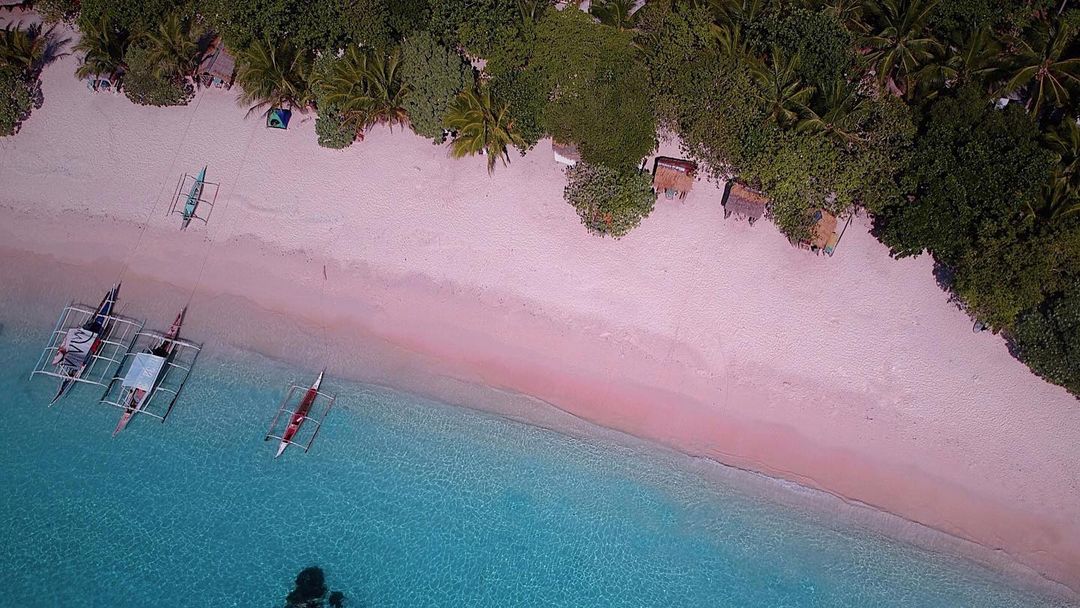
An aerial shot of the Silla Island, San Vicente Pink Beach in Northern Samar taken by Jet Santillan (@jetsantillan)

Have you heard of pink beaches in the Philippines?

Though the Philippines is famous for its white-sand beaches, there is no denying that the country also has beaches that aren’t known yet. Travelers worldwide may know about Palawan, Siargao, Cebu, and Boracay, but there is more that the Philippines has to offer. Like Barbados, Bahamas, Greece, and Indonesia, there are several pristine, off-the-beaten-path pink beaches around the country that you can find and include in your bucket list.

What makes pink beach “pink”

People only know about white and black sand beaches, so it’s no stranger that pink sands are still surprising to some because of their color. But, what makes pink sand “pink”? 

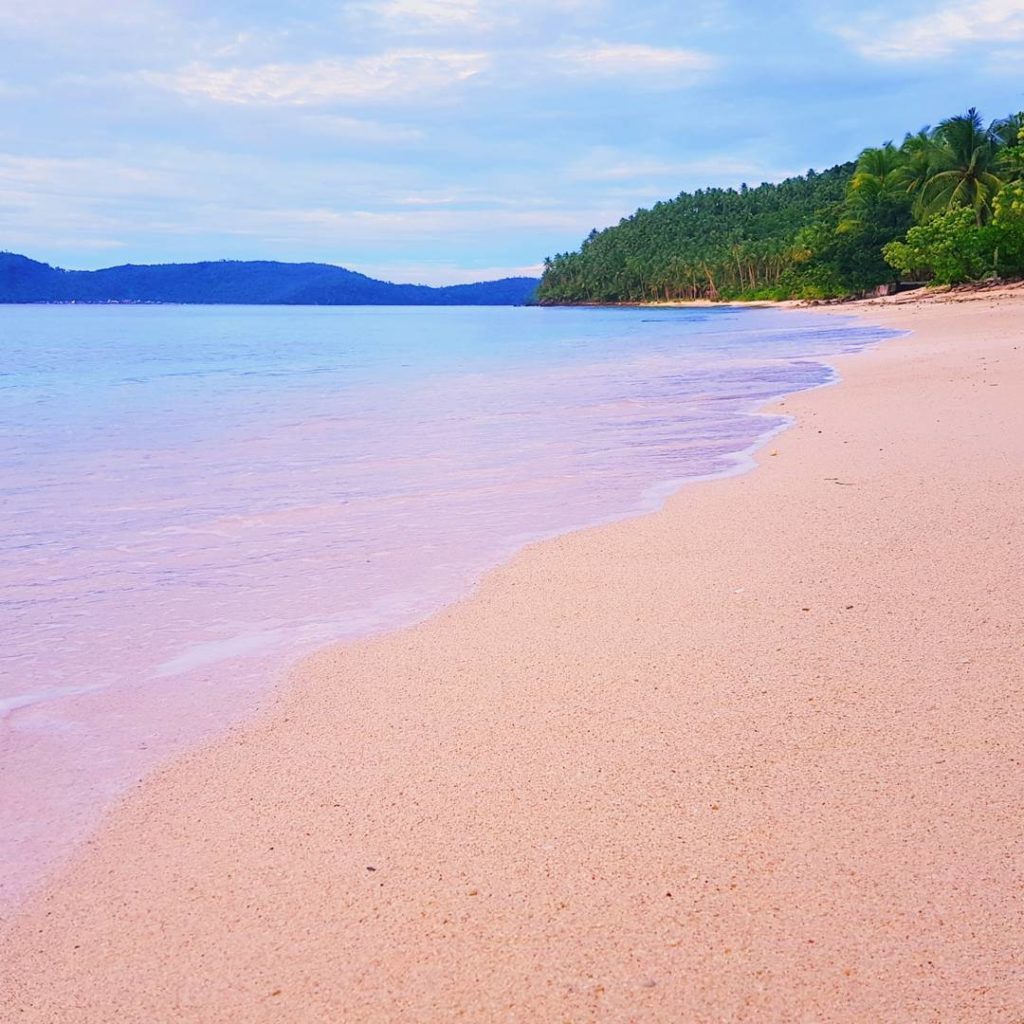
The pink hue actually comes from a microscopic organism called “foraminifera,” algae in pink. These organisms are present as they are in the sand mix with corals, shells, and calcium carbonate. Sounding too scientific? Well, science does magical things we’ve seen, just like these four pink beaches we have in the country. 

  1. Great Santa Cruz Island in Zamboanga City
Aerial drone of sandy beach on a tropical island. Great Santa Cruz island. Zamboanga, Mindanao, Philippines.

If you are looking for a unique island to check off that bucket list, then you should come and visit Great Santa Cruz Island in Zamboanga City, which is in the Southern part of the Philippines! The island itself is famous due to its fine pink sand that mimics the sea’s pink corals’ color. It is no wonder that this sun-drenched island was named one of the world’s best beaches by National Geographic.  What makes the island unique and famous is the lovely pink hue sand that glows under the sunlight and calm waters with some mangrove trees as background.

As an ecotourism site, Santa Cruz Islands or Las Islas de Santa Cruz only allow low-impact structures, facilities, and activities to ensure that the islands’ natural environment remains pristine and habitable for various animal species.  Aside from enjoying the scenic beach and strolling around the island, you can also do  other activities such as snorkeling,  diving, bird watching, lagoon tour, and cultural immersion in a small peace-loving Sama-Bangingi community.  If you are looking to experience local cuisine, then locals can prepare good ol’ seafood dishes just for you. 

Getting There: The island is just a 15-minute boat ride from Zamboanga City’s bustling commercial district, about a 90-minute plane ride from Manila. Since the islands are protected seascape and landscape areas, the best way to visit the island is to get in touch with the Zamboanga Tourism Office or the Protected Area Management Office through its Facebook account (Las Islas de Sta. Cruz – Pink Sand Beach) or email at zcpamolgu@mail.com. You may also contact your preferred travel advisor or travel agent to facilitate your travel arrangements. Booking is then encouraged 30-days before your actual visit to the island. You may enjoy this less crowded nature preserve from 7:00 a.m. to 2:00 p.m. since the overnight stay is not allowed. The island is a lot quieter, with only 500 visitors allowed per day, making it a perfect island getaway escape. 

2. Sila Island in San Vincente, Northern Samar 

Shot of the Silla Island, San Vicente, Northern Samar, Philippines. Taken by anonymous.

Are you dreaming of going to a tropical island retreat while avoiding throngs of sun-seekers? Why not explore one of the most famous off-the-beaten-path pink beaches in the east-central Philippines Sila Island in Northern Samar? Sila Island charms tourists because of its pink sand hue and natural beauty. The pink sand isn’t as ultra pink as you’d expect, but the pinkness can be noticeable up close, which is still impressive. Plus, the island is the definition of clean and beautiful, where you can submerge yourself under the sea to discover what this beautiful island has to offer.

On the island is the Pink Sand Resort, where you and your friends can rent cottages for a day so you can enjoy the clear blue horizon besides the pink sand.  You may bring  your snorkeling gear as Sila Island is considered one of the Philippines’ best snorkeling spots. Don’t forget to prepare your own food, drinks, sunblock, garbage bag, and enjoy one of the most impressive pink beaches you could find in the Philippines. 

Getting There: Sila Island is about a 40-minute flight from Manila to Catarman town in Northern Samar or Tacloban City in Leyte. Chartered jets are also available from Cebu, Davao, and Manila. From Catarman (almost 2-hour drive) or Tacloban City (more than 4-hour drive), hop on a chartered van to Calbayog and San Isidro towns, a jump-off point to San Vicente. A passenger boat or ferry will take you to Sila Island that departs daily at 7:00 in the morning, except Sunday, and returns to San Isidro town at 2:00 p.m. You may also have the option to charter your own boat.

3. Subic Beach in Sorsogon

Who would’ve thought you’d get two pink beaches in one whole beach? Only in Sorsogon! This particular Subic Beach in Matnog, Sorsogon, is divided into two: the locals call it Subic Liit (Subic Small Beach) and Subic Laki (Subic Big Beach). The sand is fine, and it’s pink sand also comes with crushed red corals mixed with creamy white sand, a unique island trait.  

Instead of landing on the beach right away, you can explore the sea caves and their rock formation near the southeastern end of Calintaan Island. Enjoy the crystal blue water as you swim, but never forget to grab that life vest of yours. 

You may have the option to avail of a private day tour that kicks off from Legazpi City, including boat rides, fish feeding at Juag Lagoon Fish Sanctuary, and swimming. The tour package includes hotel transfers, private boat rental with life jackets, complimentary refreshments, cottage rental, entrance fees, and tour guide services. 

You can see several native-style huts and cottages; some even have air conditioning in Subic Laki and book an overnight stay as the beach offers affordable accommodation rates. 

4. Tikling Island in Sorsogon

Tikling Island in Matnog, Sorsogon, Philippines. Mt Bulusan in the background. Shot from the San Bernandino Strait.

While exploring Sorsogon for the pink beach, Tikling Island, located along the scenic waters of Matnog Bay, could be your last stop. As the boat sails towards the island from Calintaan Island, you’ll get a glimpse of the aquamarine waves to the shores of the fine sands mixed with scattering pink corals in the entire coast, making the sand pink. 

With its charming rose-tinted shores, Tikling Island will impress you with its beautiful beach. Another beach that is just miles away from Subic Beach, this island isn’t known to most tourists, considering it as Sorsogon’s hidden gem. Explore this island and get the feel of its pink sand. 

Getting There: Fly from Manila to Legazpi City in Bicol. You may hop onto a chartered van from Legazpi City to Matnog town, then take a private boat to Juag Lagoon Fish Sanctuary for fish feeding, island and pink beaches hopping (Calintaan and Tikling Islands) before boarding your boat bound for Matnog town proper and driving back to your hotel in Legazpi. Or, you have the option to stay in Subic Laki.

Into the green: eight destinations for an eco-friendly escape

Featured Content by Lonely Planet

TAMARA HINSON Lonely Planet Writer22 JANUARY 2021

Deciding to adopt a sustainable tourism ethos doesn’t mean vowing never to take another flight or to only travel to off-the-radar locales. Instead, invest your wanderlust in places that are rolling out initiatives to minimise the impact of tourism on the environment.

In many ways, travel can be a force for good, so kick-start your eco-friendly escape with one of these dynamic destinations doing their bit for sustainability; from hotels committed to reducing energy consumption, to pioneering tours and activities designed to give back to local communities and help wildlife thrive.

6 NATIONAL PARKS AROUND THE WORLD WITH SURPRISINGLY SPECTACULAR DIVING

Featured Content by Lonely Planet

Editor’s note: Please check the latest travel restrictions before planning any trip and always follow government advice.

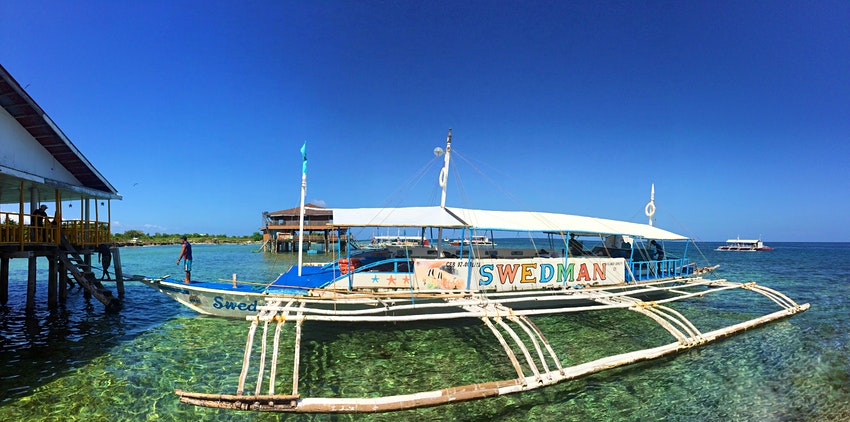
A worn white catamaran diveboat in the Philippines sits in shallow water dappled with light. In large rainbow letters on the side the name of the boat reads Swedman.
An example of a bangka, a kind of outrigger canoe used for island-hopping tours and to access dive sites in the Philippines © Michael Ballard / Lonely Planet

Philippines 

At the thousands of dive sites scattered throughout the Philippines, you’ll be enchanted by the more than 1,200 macro and pelagic species that live in these waters. In fact, the incredible biodiversity of Tubbataha Reefs National Park in Palawan earned it Unesco World Heritage Site status.

Board a liveaboard in Puerto Princesa City, then sail to dive sites like Amos Rock, Washing Machine and Black Rock to experience 600 species of fish, 360 species of coral, 11 species of sharks and 13 species of dolphins and whales, along with manta rays, barracuda, nudibranchs, pipefish and seahorses.

If a liveaboard isn’t in your budget, you can still see a boatload of sea life at Moalboal on the island of Cebu, where you’ll sail on a traditional double outrigger canoe called a bangka. Moalboal is world-renowned for its sardine run, an enormous bait ball of approximately seven million small fish that attract larger marine life in search of food. While you can dive the warm Philippine waters year round, you’ll witness the most wildlife and avoid monsoons if you visit between March and June. 

25 Photos to Fuel Your Travel Daydreams

Featured Content by Travel Pulse

March 26, 2020

El Nido, Philippines

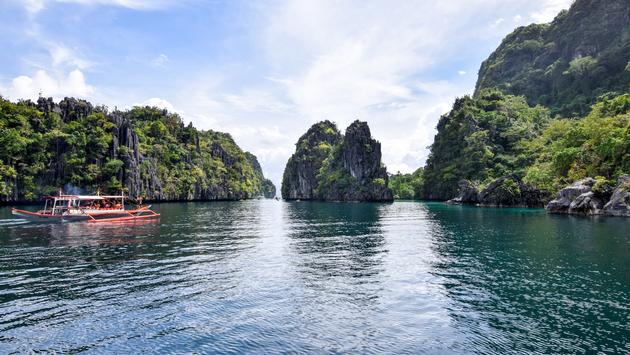
Craving that cinematic island escape? Enter El Nido and it’s surrounding islands and lagoons for your daydreaming needs. The island of Palawan is where you’ll find El Nido, your base for this venture through turquoise blue waters, hidden lagoons and limestone cliffs towering out of the sea. Head out on a traditional boat to picnic in the sun, snorkel amongst fish and discover untouched beaches.

15 Must-Try Extreme Adventure Activities in the Philippines

Adventure-junkies listen up! Check out the must-try extreme adventures in the Philippines. Is the Philippines good for adventure travel? What kind of outdoor activities can be done around the country? Are there any water activities you can try aside from the usual inland activities? Read this article to find out more about it.

For a true adventure junkie, the Philippines is a good destination. From caving to snorkeling and scuba diving, the Philippines has it all. The country’s diverse natural wonders make it a sought-after destination among adrenaline junkies. 

So whether you like outdoor adventures in the air, land, or water, you’ll find that there’s a lot of things to do in the Philippines.

15. Freediving with Sardines in Cebu

One of the most exciting, unique, and spectacular things to do in the Philippines is seeing the sardine run in Moalboal. It doesn’t have the billions of sardines, in southern Africa, the best-known sardine run in the world, but it does happen year-round. Just rent a snorkel set from the many tour operators along Panagsama Beach, jump into the water, and you’ll find them there. 

14. Multi-Day Caving Adventure in Samar

When it comes to multi-day caving tours, nothing beats caving in Samar. Called the Cave Capital of the Philippines, with the largest cave system to be found there (Langun-Gobingob Caves in Calbiga), Samar has hundreds of caves that have been explored, a small portion of the total known caves.

Caving tours in Samar range from 1-day “discovery” tours, to multi-day caving tours where you get to spend a night or two inside the caves.

13. Hiking Mt. Pulag 

The Philippines is not only famous for its beach tours but also for its hiking tours. Mt. Pulag in the Northern Philippines, the third highest peak in the country, is a popular trek for local mountaineers due to its famous sea of clouds.

The Mt. Pulag National Park has one of the richest biodiversity in the country, having vast forests full of pines, moss, and grass. It is a mountain worth climbing, both for its challenging trails and its natural beauty.

Hiking Mt. Pulag can last between 1-4 days, depending on the trail. Beginning climbers take the Ambangeg trail which is possible on a day trip, while the Akiki trail is a challenging, multi-day hike requiring physical fitness and training prior to the climb.

12. Wakeboarding in Camarines Sur

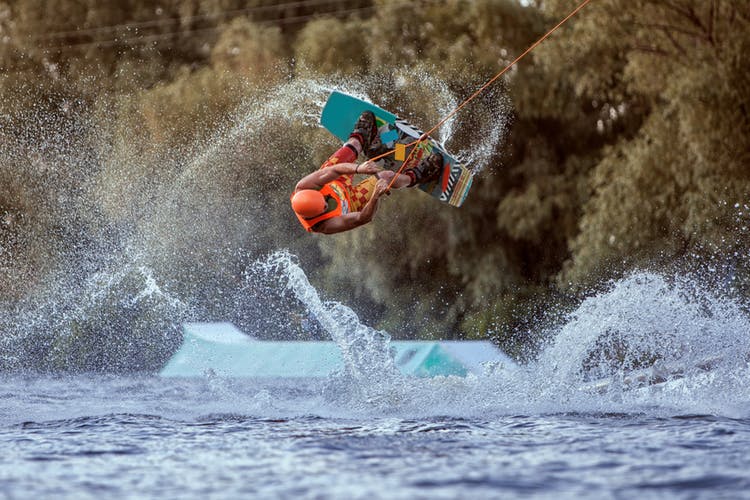
Wakeboarding tours are also popular as it involves riding a wakeboard on the water surface. The wakeboard is normally towed by a motorboat or by closed-course cable systems like in CamSur Wakeboarding Complex, a world-class water sports complex that is the first in the Philippines and in Asia. Aside from wakeboarding, visitors can also try water skiing, kneeboarding, and wake skiing.

11. Surfing in Siargao

Surfing tours are exciting, and the Philippines doesn’t lack for surfing destinations all over the country. There’s San Juan in La Union and Baler in Aurora, best to visit from October to April and from December to February, respectively.

The most popular, however, is Siargao Island in Surigao del Norte because of several surfing spots that can be found on the island. Its Cloud 9 reef break has even been called one of the best waves in the world. The best time to catch swells there would be from July to December.

While Siargao is the surfing capital of the country, it does not only offer good surfing breaks, but also some of the best tourist spots in the Philippines, from lagoons, caves, and the best beaches in the country.

10. Whitewater rafting in Kalinga and Cagayan de Oro

River tours are popular for both local and international travelers as it often includes whitewater rafting, a recreational outdoor activity that uses an inflatable raft to navigate a river or other body of water. This is often done on different degrees of rapids. Dealing with risk and the need for teamwork is often a part of the whitewater rafting experience.

In the Philippines, there are several places where you can go whitewater rafting. Near Manila, you can do it in Magdalena, Laguna, where you will navigate over 20 rapids in a couple of hours. The two most popular whitewater rafting destinations, however, are up north in Kalinga and down south in Cagayan de Oro.

In Kalinga, you’ll have the best time navigating the 175-kilometer-long stretch of the Chico River. You can even bundle it up with other activities in Kalinga, like getting a tattoo in Apo Whang-Od’s village of Buscalan.

Cagayan de Oro, on the other hand, is known as the Adventure Capital of the Philippines and the Cagayan River is best known for whitewater rafting. It offers rapids with varying grades that suit everyone, from beginners to whitewater rafting junkies. There are direct flights to Cagayan de Oro daily, while you can get to Kalinga by flying to Tuguegarao and then taking a 2-hour land trip.

9. Ultralight Flying in Pampanga

Ultralights are small 1- or 2-seat fixed-wing aircraft. For people who love flying and want to experience flying and being in a small aircraft, ultralight or microlight flying is a good recreational activity. You will also experience flying with the wind on your face as the ultralight has an open-air cockpit.

The Philippines is a good place to try the ultralight as the country has a good flying condition, especially during the summer season. It’s not dirt cheap, but there is no cheaper way to fly than with ultralight planes. It’s one of the top outdoor activities in the Philippines.

8. Canyoneering in Cebu ​

Canyoneering tours are popular because it involves hiking, bouldering, climbing, rappelling, jumping, and swimming while exploring canyons. It’s a more fun activity than just ordinary hiking. One of the best places to do so is in  Cebu, where you will start in Alegria and end up in Badian.

canyoneering day tour takes 4-5 hours and the fee covers all the gears (life vest and helmet) and a bottle of water. It will challenge you to conquer your fear of heights, and even non-swimmers can join, too. For those who want adrenaline-pumping activity while exploring canyons and falls, canyoneering in Kawasan Falls is a must.

7. Swimming with Whale Sharks

You can swim with whale sharks in some parts of the Philippines. These whale sharks grow at 32-40 feet on average, but despite their size, they are known to be docile, earning them the “gentle giant” nickname.

There are two locations in the Philippines where you can swim with whale sharks: Donsol and Oslob. Whale shark season in Donsol is from December to May, with the best time from February to April. While whale shark sighting is not assured, since these are wild creatures, you will likely see at least 5 during peak season and as many as over 40. 

There have been controversies with the whale shark tours in Oslob, with the primary argument being the lack of sustainability practices in place. The Oslob local government unit, however, has taken steps to limit the number of tourists to the area to reduce the stress tourism brings to these gentle creatures. 

6. Sandboarding in Ilocos Norte   

Sandboarding is a recreational extreme sport similar to snowboarding but instead of snow, you ride a sandboard down or across the sand dune. It can also be done while standing up or lying on your belly. It is a popular sport in desert or coastal areas with sand dunes.

Sandboarding in the Philippines is quite a new sport and you can only do this at the sand dunes in Ilocos Norte. This sand dune is getting more and more popular not only for sandboarding but also for ATV and 4×4 riding.

5. Paragliding in Sarangani

If you want to experience flying but find skydiving too extreme, paragliding is your next best choice. It uses a lightweight and free-flying glider aircraft and requires a licensed pilot to operate it.

There are few paragliding sites across the Philippines but Sarangani in the Soccsksargen Region in Mindanao offers the best view with its rolling hills and the Sarangani Bay in the background. You can also find paragliding tours in Carmona, Cavite and Narvacan, Ilocos Sur. A paragliding trip takes only around 20 minutes, but it’s more than enough to satiate your thirst form adventure. You can try other Sarangani tours after your paragliding trip.

4. Tandem Skydiving in Cebu

Skydiving is one of the most extreme adventure sports in the world. It was developed for military use but is now one of the most popular recreational activities for adrenaline junkies. It is also one of the most expensive, given the gears and the expertise involved in doing sports.

If you can get over your fear of heights, and want a very unique perspective of seeing the Philippines from above, head to Cebu to go skydiving. While it is indeed pricey to undertake this activity, the view of the numerous beautiful beaches in Cebu surrounding the province is priceless indeed.

3. Canyon Swing in Bohol     

Bungee jumping is not in the Philippines yet. However, a very good alternative to the different outdoor adventures is the canyon swing called The Plunge in Danao Adventure Park in Bohol. Unlike bungee jumping where you jump off a platform, you’ll hang by your feet in Danao and be dropped over 200 meters above the river. You’ll get around 4 seconds of free fall before swinging around 100 meters wide around the canyon.

An alternative to hanging by your feet is being dropped in a sitting down position, where you can see the ground rushing forward to meet you as you drop. Just state your preference!

If you want to tick off “bungee jumping” from your bucket list but find the 200-meter The Plunge too much, head to the Tree Top Adventure in Subic. There is a range of fun activities there, including zipline rides, but one activity similar to The Plunge is the Tree Drop. You climb up to a 60-foot high platform and experience free fall for around a second, which means that before you can scream, the free fall is over.

2. Spelunking in Sagada

Sagada, a small town in the northern part of the Philippines, is best known for its hanging coffins. However, it’s also known for adventure travel in the Philippines due to its beautiful limestone caves.  

The province of Sagada has more than 60 stunning caves with spectacular rock formations, the biggest of which is Sumaguing Cave. It is an expansive cave network known for its gorgeous stalagmites, stalactites, giant rock formations, and steep descents. It is also considered as the deepest cave in the country and has a big role in the culture of the people in Sagada.

A DIY tour of the Sagada caves is not possible; a guide from the Sagada tourism office is required. While you can decide to explore Sumaguing alone, it is best to check for Sagada tours that bundle up Sumaguing with another large cave, Lumiang.

1. Coron Diving Experience  

As one of the biggest archipelagos in the world, it’s not surprising that the Philippines is one of the top diving destinations worldwide. It is part of the Coral Triangle, an area in the western Pacific Ocean that’s incredibly rich in marine life. It comprises six countries — Indonesia, Malaysia, Papua New Guinea, Timor Leste, and Solomon Islands, and of course, the Philippines.

You’ll find in the Coral Triangle hundreds of species of reef-building corals, six out of the world’s seven marine turtle species, and thousands of reef fish species. 

Featured Content by Guide to the Philippines